
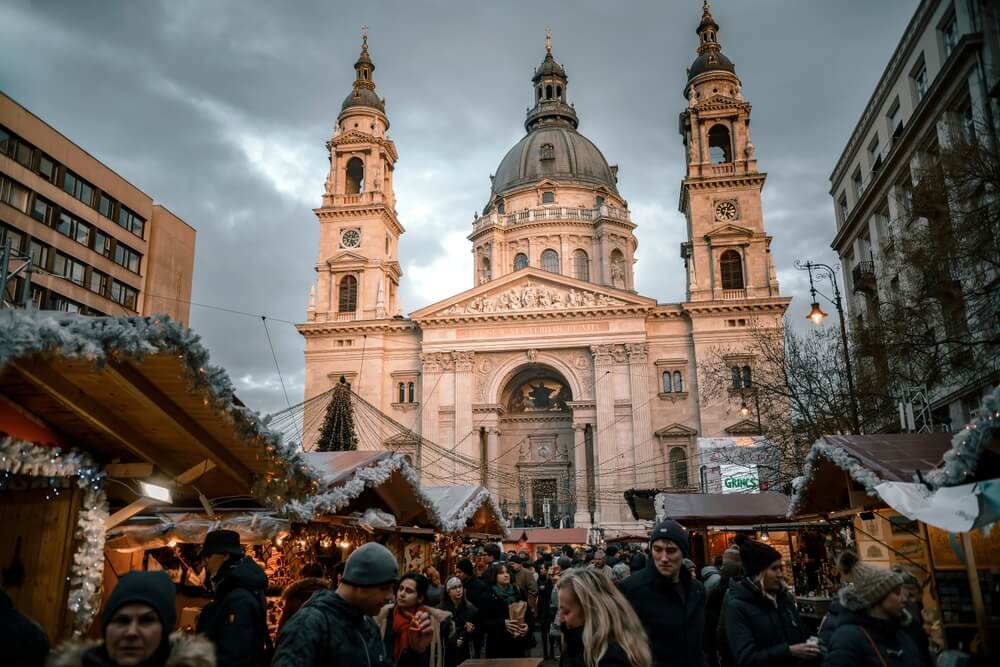
Budapest vs. Prague Christmas Markets 2025: Which One to Visit?
The Numbers First
92,000 Europeans voted. Prague didn’t crack the top 10. Budapest landed at #5.
That’s the news nobody expected.
Why This Matters
Both cities sit 200km apart. Both have castles, cobblestones, and centuries of history. Both hold Christmas markets from late November through early January. But something shifted in 2025.
Prague got ranked 8th. Budapest climbed to 5th. Vienna, the assumed heavyweight, came in 7th.
The reason isn’t prettier lights. It’s what you can do around the market.
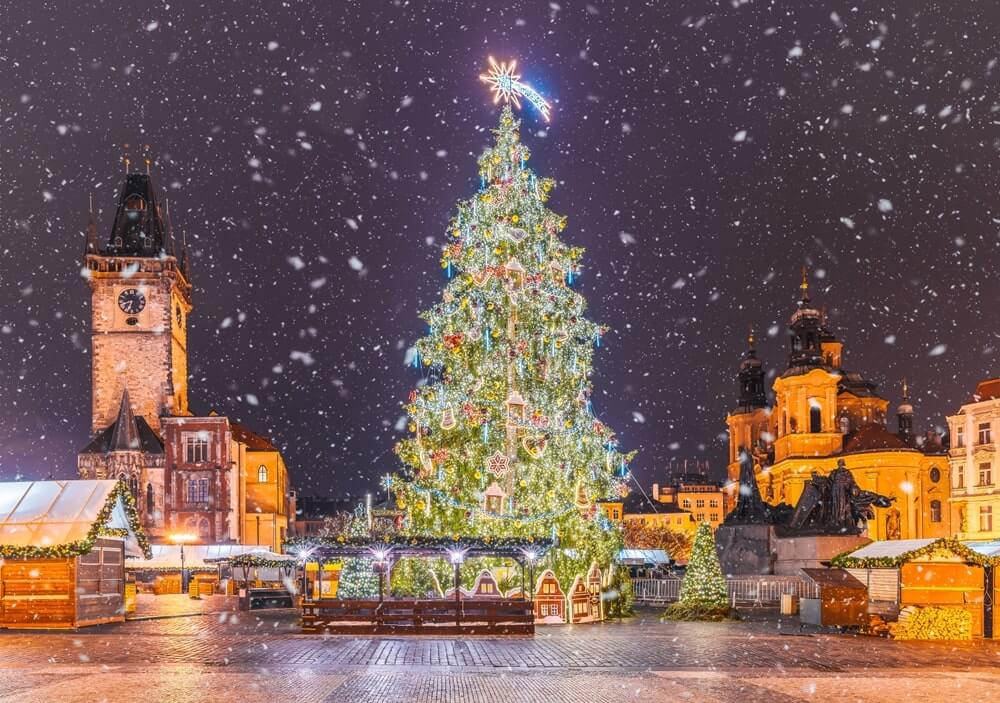
Prague Christmas Markets
The Setup: Old Town Square hosts the main market. Wenceslas Square has a secondary one. Both are beautiful. Astronomical Clock nearby. Charles Bridge a short walk away. The vibe is tourist-heavy but architecturally stunning.
What You’ll See: Ornaments, handmade crafts, wooden toys, traditional Czech puppet shows. Food stalls sell trdelník (sweet pastry), Goulash in bread bowls, Becherovka (Czech herbal liqueur).
The Crowd Reality: 1.5 million visitors hit Prague during Christmas season. Old Town Square gets packed. December 21–23, you’re shoulder-to-shoulder. December 15–20, you can move. January 5+ is quiet but some stalls close.
The Cost: Market entry is free. Food costs 150–300 CZK per item ($6–12 USD). Hotels spike to 3,000+ CZK/night ($120+). Restaurants near the square charge Prague’s highest rates.
The After-Market: You’ve got the castle (worth visiting once), Charles Bridge (crowded, good light at dawn), and decent beer halls. That’s the entertainment loop.
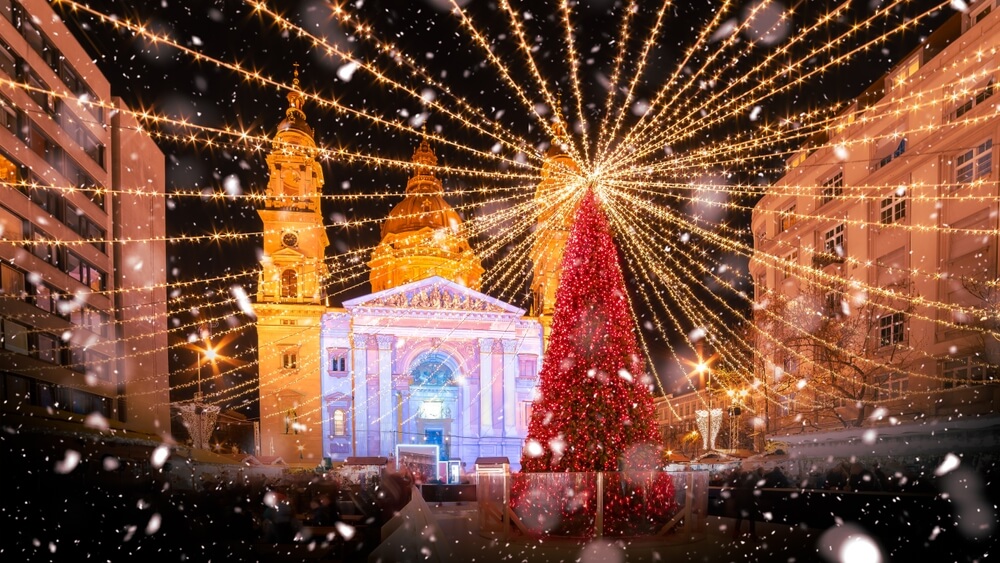
Budapest Christmas Markets
The Setup: Vörösmarty Square hosts the main market. St. Stephen’s Basilica has one nearby. Smaller markets pop up across the city. The Parliament building glows in the background. Less iconic than Prague’s Old Town, but more atmospheric.
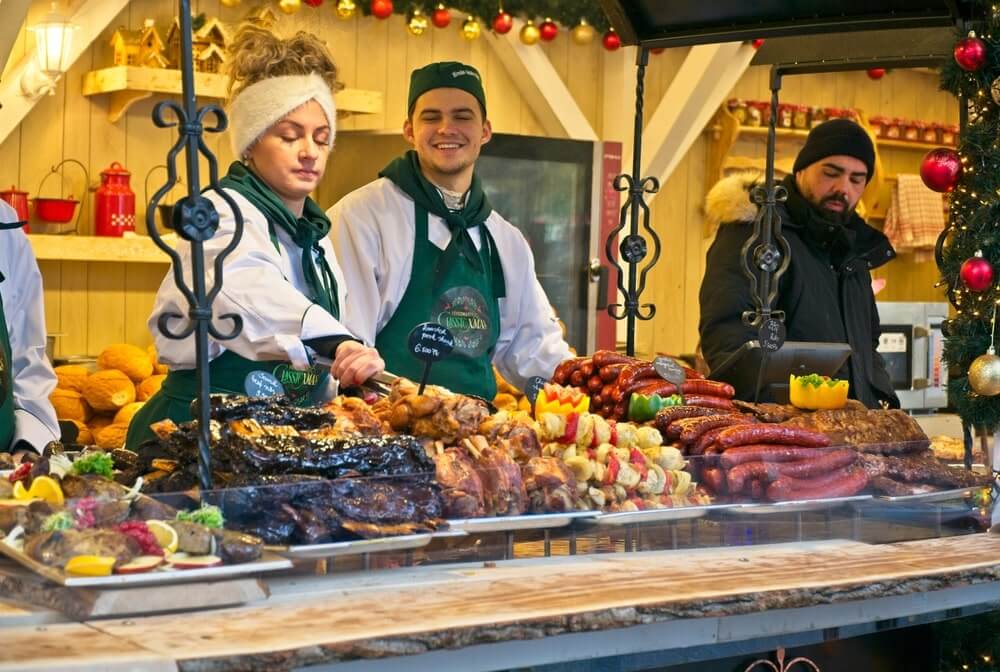
What You’ll See: Similar crafts and ornaments, plus Hungarian specifics—Mézeskalács (gingerbread), chimney cake, paprika everything, Tokaji wine. Less of the touristy puppet show vibe. More local families browsing.
The Crowd Reality: 800,000 visitors during Christmas season. Vörösmarty Square gets busy but never Prague-packed. December 15–20 is manageable. December 21–23 is full but walkable. January 5+ gets quiet fast.
The Cost: Market entry is free. Food costs 500–1500 HUF per item ($1.50–5 USD)—roughly half Prague’s price. Hotels stay 15,000–25,000 HUF/night ($50–80) even during peak. Restaurants average 3,000–5,000 HUF for a full meal ($10–17).
The Game-Changer: Thermal baths. The Széchenyi Bath, Gellért Bath, Rudas Bath—all operating during winter. A soak costs 3,000–4,000 HUF ($10–13). You can thermalize at 38°C, step outside into December air, walk to the market, drink mulled wine, go back to warm water. This loop isn’t available in Prague.
Direct Comparison
| Factor | Prague | Budapest |
|---|---|---|
| Main market | Old Town Square | Vörösmarty Square |
| Crowds | 1.5M visitors total | 800K visitors total |
| Dec 15–20 | Busy, doable | Less busy, very doable |
| Dec 21–24 | Packed | Full but moveable |
| Food price avg. | 150–300 CZK ($10–15) | 2500–5500 HUF ($4.50–5) |
| Hotel avg. | 3,000+ CZK ($120+) | 25,000–35,000 HUF ($50–100) |
| Thermal baths | None | 4 major bathhouses |
| Sunset views | Charles Bridge | Parliament building |
| Market “realness” | Tourist-oriented | Mix of locals and tourists |
| Best dates to go | Dec 15–20 | Dec 15–29 (wider window) |
Why Budapest Climbed the Rankings
Three factors converge:
1. Experience Stacking Works
A Prague trip is: market, castle, bridge, beer. Repetitive if you stay longer than 2 days.
A Budapest trip is: market, thermal bath, Parliament building views, food market, Danube boat ride. You can fill 4–5 days without looping.
2. Authenticity Beats Scale
Prague’s Old Town Square is beautiful and packed with tourists. Budapest’s Vörösmarty Square has locals. The vendors know their product. You’re not there for the Instagram moment—you’re there for the experience.
When to Go
Prague: December 15–18 or January 5+ (avoid Dec 19–Jan 4)
Budapest: December 10–22 is solid. January 5+ is empty.
Both together: Pick December 15–17. Train between them is 3 hours. Stay 1.5 days in each. You skip peak season in both, experience both markets, and finish before chaos hits.
What You Actually Lose/Gain
Prague wins on:
- Architectural drama (castle, bridge, astronomical clock)
- Historical weight (medieval core feels older)
- Tourism infrastructure (every language spoken, every hotel polished)
Budapest wins on:
- Thermal water
- Food authenticity
- Price
- Less crowding
- More days to explore without repeating yourself
The Practical Route
If you have 5 days:
- Days 1–2: Budapest (thermal bath, market, Parliament, Jewish Quarter)
- Travel day (3 hours by train)
- Days 3–4: Prague (Old Town, Charles Bridge, castle view from the beer garden)
- Day 5: Back to Budapest or Prague for a final market walk
Total cost per person: $250–350 (flights not included).
Download Wingman
Both cities have audio tours.
You get Christmas market history, local food recommendations, and walking routes that skip the crowds.
Don’t spend December 22 arguing about where to go next. Your already know..
The Real Answer
Prague is iconic. You might visit it once for the postcard. Budapest is a place you return to. The thermal baths keep you coming back.
Book Prague for the history. Book Budapest for the experience.