
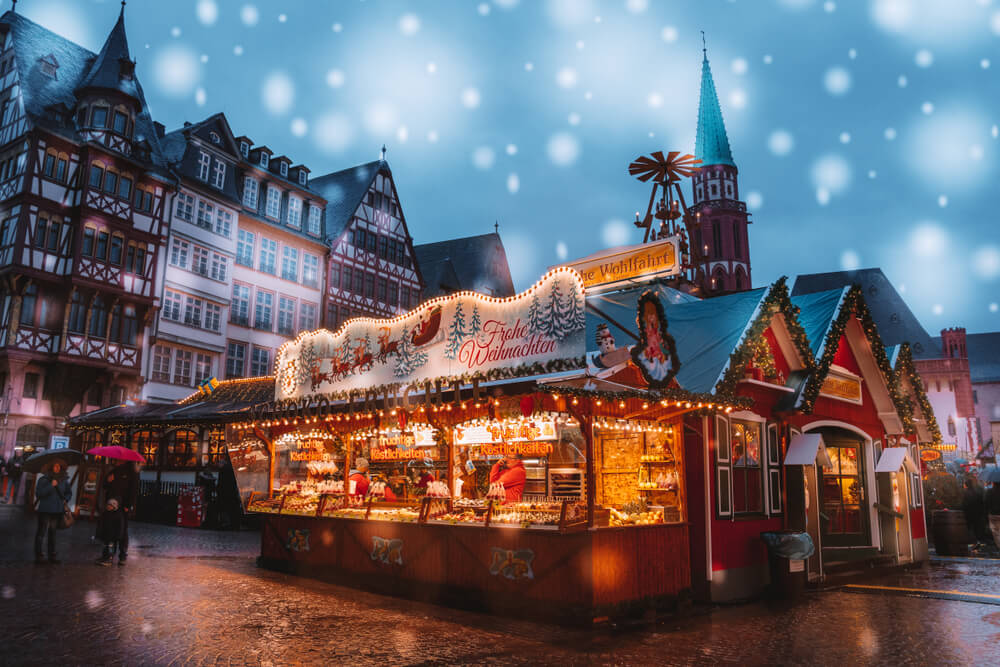
Christmas Market Food Guide: What to Eat at Europe’s Best Markets
People talk about Christmas markets like they are all about lights and decorations.
That is only half true. The real reason people come back every year is the food.
If you have ever stood in the cold holding a warm mug of mulled wine, you already know this.
The smell of cinnamon, sugar, roasting meat, and caramelized dough pulls you in long before you see the stalls. Christmas markets are where Europe’s best comfort foods all show up at once.
The hardest part is not finding something good. It is deciding what to try first.
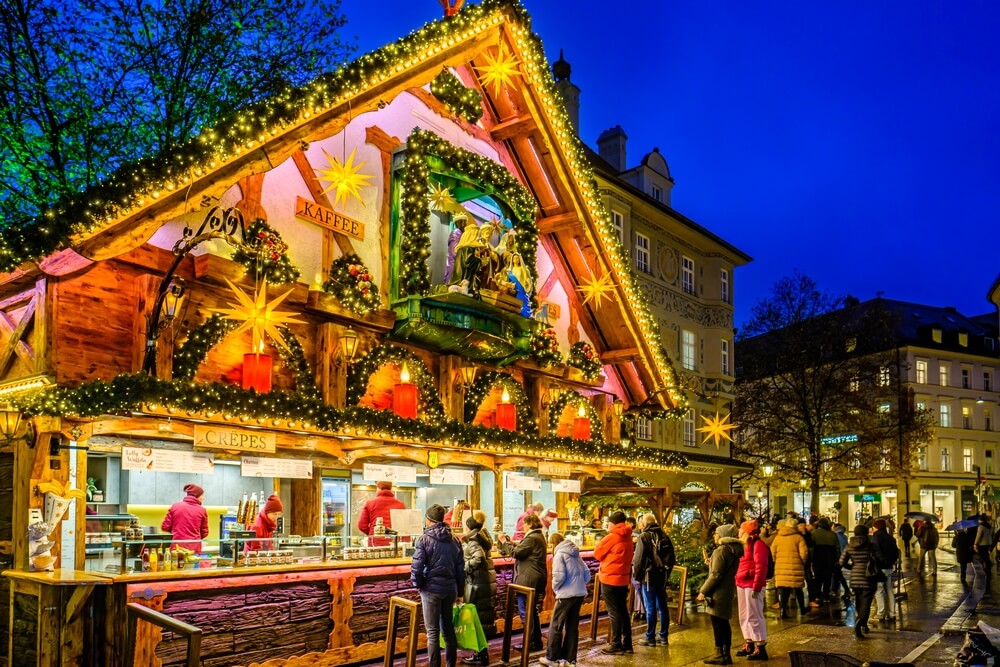
What to Eat at German Christmas Markets
Germany is the blueprint. Cities like Dresden and Nuremberg take Christmas markets seriously, and the food shows it.
Lebkuchen
Soft gingerbread made with honey and spices. Often heart-shaped and iced. Chewier than most people expect. One or two is enough. €1 to €2.
Glühwein
Hot red wine with orange, cinnamon, cloves, and star anise. Every stall has its own recipe. €4 to €6, usually in a ceramic mug you can return.
Bratwurst
Grilled sausage in a crusty roll with mustard or sauerkraut. Simple and perfect when it is cold. €3 to €5.
Roasted Almonds
Almonds cooked in sugar and cinnamon right in front of you. Follow the smell. €3 to €5.
Käsespätzle
Egg noodles with melted cheese and crispy onions. Heavy, filling, and exactly what you want after walking for an hour. €4 to €6.
Poland’s Christmas Markets: Great Food Without the Crowds
Polish markets are still a bit of a secret. Prices are lower, crowds are lighter, and the food is excellent, especially in Kraków.
Żurek
Sour rye soup with sausage and potatoes. Warm, rich, and very comforting. €3 to €5.
Oscypek
Smoked sheep’s cheese from the mountains, grilled and served with cranberry sauce. Salty, smoky, and slightly sweet. €4 to €8.
Pierogi
Dumplings filled with potato and cheese or fruit. Soft dough is the sign of a good stall. €3 to €5.
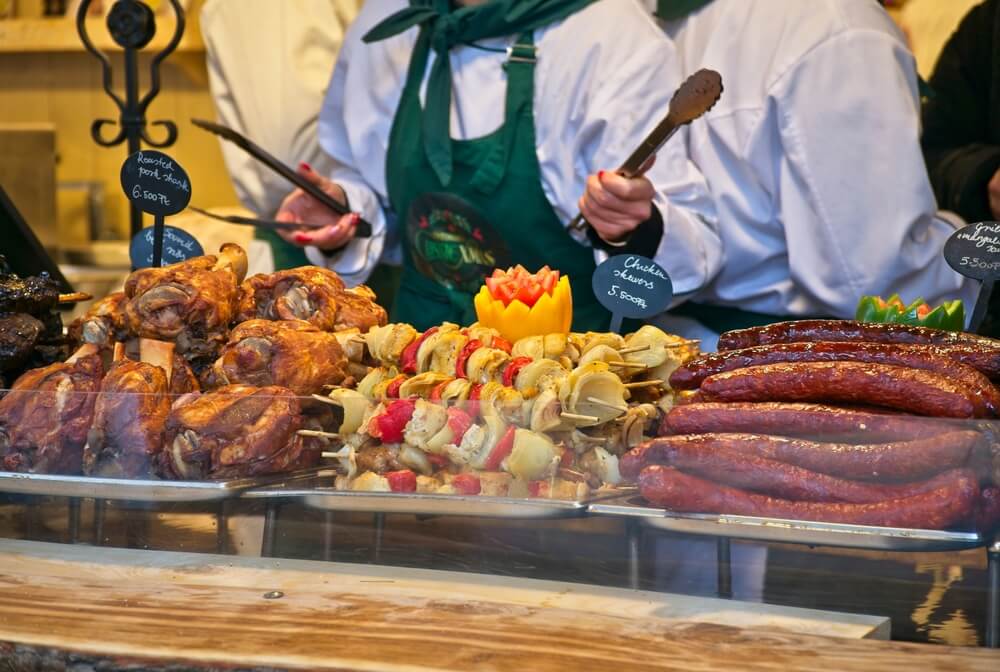
Kielbasa
Polish sausage is bolder and smokier than most German versions. €3 to €4.
A full meal in Poland often costs 30 to 40 percent less than in Austria or Germany.
Hungarian Christmas Market Favorites
Budapest markets mix sweet pastries with rich, paprika-heavy dishes.
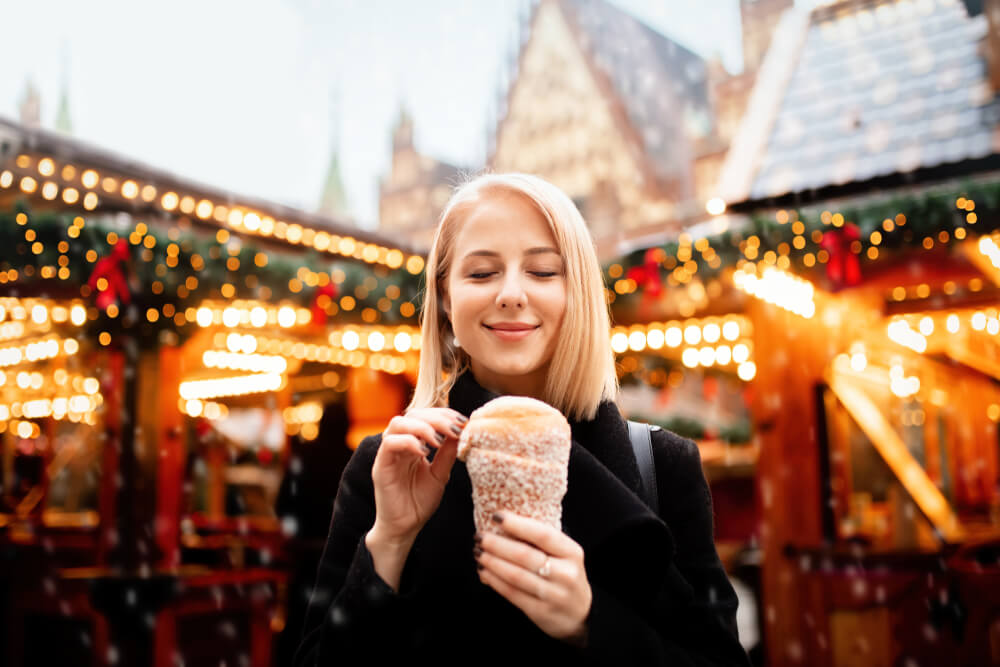
Chimney Cake (Kürtőskalács)
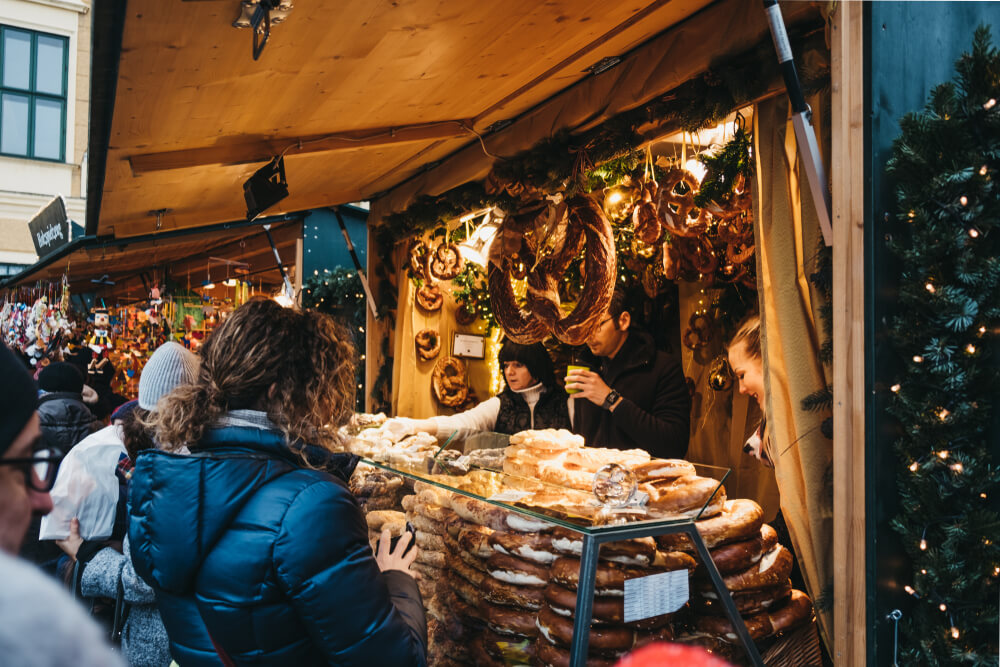
Rolled dough baked over an open flame, coated in cinnamon, walnut, or cocoa. Crisp outside, soft inside. Easy to eat while walking. €3 to €5.
Lángos
Fried dough topped with sour cream and cheese. Greasy, filling, and very hard to stop eating. €2 to €3.
Goulash in Bread Bowls
Beef stew with paprika served inside a hollowed loaf of bread. €4 to €7.
Hungarian Gingerbread (Mézeskalács)
Darker and more heavily spiced than German versions, often beautifully decorated. €2 to €4.
Austria and Switzerland: Fewer Snacks, Bigger Plates
Markets here are more expensive, but portions are larger and more refined.
Schnitzel
Breaded and fried meat cutlet. Heavy, filling, and perfect in winter. €8 to €12.
Raclette
Melted cheese scraped over potatoes with pickles and onions. This is a real meal. €6 to €9.
Kaiserschmarrn
Shredded pancakes with plum sauce. More common in cafés but worth seeking out. €5 to €7.
Feuerzangenbowle
Mulled wine with a rum-soaked sugarloaf set on fire above the pot. Half drink, half show. €5 to €7.
How to Eat Well Without Overspending
The best approach is balance.
Pick one special item per market, like raclette in Switzerland or schnitzel in Vienna. Then fill in with cheaper classics like soup, sausage, or pastries.
Average daily food costs:
- Vienna and Dresden: €40 to €50
- Budapest and Prague: €30 to €40
- Kraków: €25 to €35
Eastern Europe is the best place for full meals. Western markets are better for one standout dish.
Drinks Beyond Mulled Wine
Mulled wine is everywhere, but there is more to try.
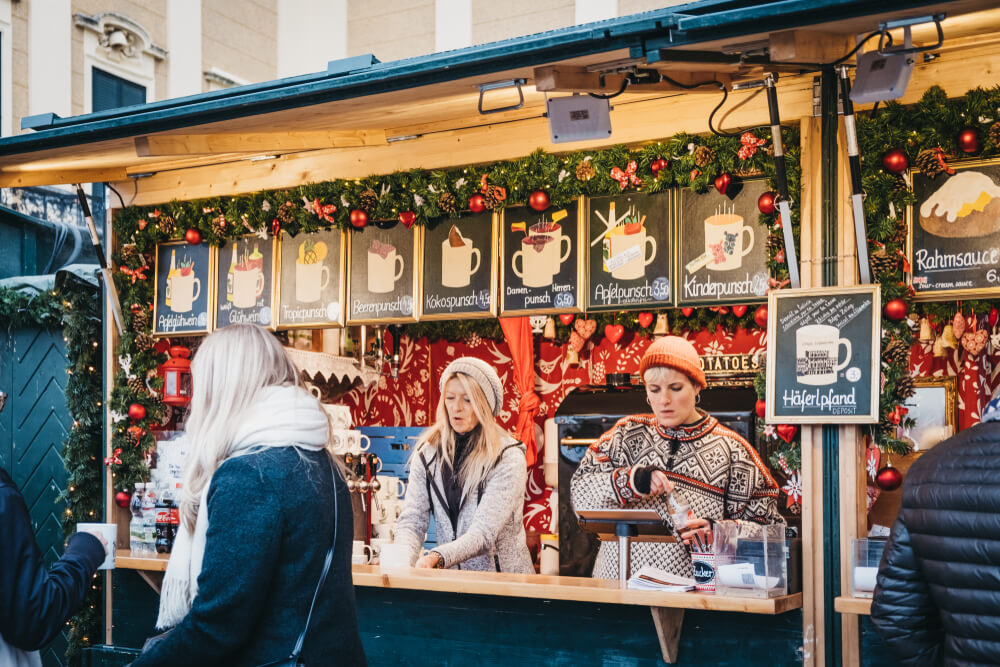
Punsch is a hot fruit drink made with apple, orange, or plum. Gluehmost is mulled apple cider. Eierpunsch is an eggnog-style drink with rum.
Prices range from €3 to €6. Recipes vary by city, so trying more than one stall is always worth it.
Best Time to Visit Christmas Markets
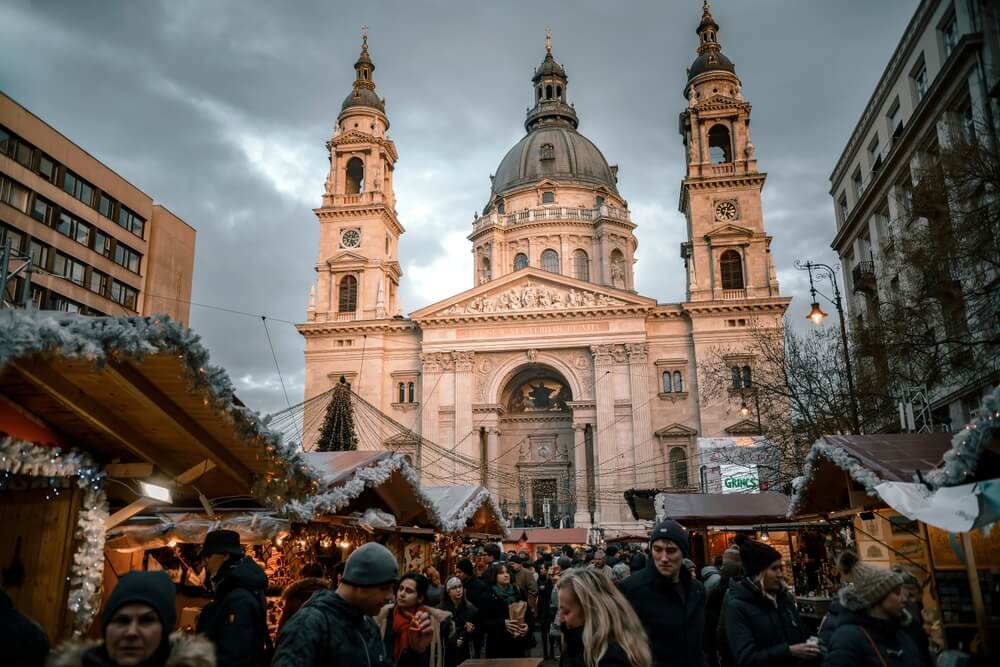
Early December is ideal, especially from December 1 to 15. Markets are fully open, food is fresh, and crowds are manageable.
Morning visits are underrated. Vendors are restocking, lines are short, and the atmosphere is calmer.
Avoid December 23 and 24 if you can. Weekends in mid-December are also very crowded.
How Wingman Helps You Find the Good Stuff
Wingman’s city audio guides are built for exactly this kind of trip. The app highlights the best Christmas markets, points out reliable food stalls, and explains what you are eating while you eat it.
You can follow mapped walking routes, check real user reviews for specific vendors, and book nearby restaurants for evenings when standing in the cold stops being fun.
It turns wandering into a plan without killing the spontaneity.
Final Thoughts
Christmas markets were never about shopping. They were about staying warm, eating well, and spending time together in winter.
The food is why people return. It tastes the same every year, made by the same families, using the same recipes. That familiarity is part of the magic.
Go hungry. Walk slowly. Eat the same thing twice if it is good. Christmas markets reward patience far more than rushing from stall to stall.
For audio guided routes, local food tips, and market audio stories, explore more at www.wman.com.