
Everyone Is Finally Travelling in June. Andalusia and Dalmatia Are Why. | Wingman

shutterstock 1889149021

Everyone Is Finally Travelling in June. Andalusia and Dalmatia Are Why. | Wingman

Everyone Is Finally Travelling in June. Andalusia and Dalmatia Are Why. | Wingman
Travel Trends June 2026 May 2026 7 min read

Something has shifted in how Europe gets visited in 2026. Peak summer is no longer the default. More people are choosing June over August, Seville over Barcelona, Split over Dubrovnik in July — and two places are absorbing most of that redirected attention right now.

The numbers are clear. A Skyscanner survey found that 34% of travelers are actively seeking quieter destinations after experiencing overtourism firsthand. Lighthouse hospitality data across five major European cities shows that May-June and September-October now outperform traditional July-August peak in occupancy — the first time in modern tourism history that shoulder season has overtaken summer. The travelers moving earlier are not settling for less. They are getting more: better prices, shorter queues, restaurants that still have tables, and cities that still feel like cities rather than open-air queuing systems.

Andalusia and Dalmatia are the two places that benefit most from this shift in June specifically. Here is why — and what to do in both of them.

34% of travelers actively seeking quieter destinations in 2026
26°C average in Andalusia and Dalmatia in June — warm, not punishing
20+ Wingman audio tours across both regions combined

Why June is the right answer to the overtourism problem

July and August in southern Europe now come with a tax. Not just the tourist taxes that Venice, Barcelona, and an expanding list of cities charge at the door — but a tax on your experience. The Alhambra in Granada sells out weeks in advance. Dubrovnik’s Old Town fills to its daily visitor cap by mid-morning. Tables at anywhere worth eating in Seville in August require a reservation made in a different season.

June solves most of this. In Andalusia, June averages 26°C in Seville, 23°C in Granada, with long evenings and the orange blossom scent still faintly present in the older neighbourhoods. The Alhambra has timed entry slots available with a few days’ notice rather than weeks. In Dalmatia, the Adriatic is warm enough to swim in from early June, the coastal towns between Split and Dubrovnik are still navigable on foot, and the yacht season has not yet turned every marina into a parking lot.

The travelers moving to shoulder season are not settling for less. They are getting more — better prices, shorter queues, and cities that still feel like cities.

Both regions also have something that most overtourism-hit destinations lack: enough depth to sustain slow travel. Andalusia is not one city. It is a region of white villages, sherry bodegas, flamenco in real tablaos rather than tourist ones, and a coast that most visitors fly over on the way to Malaga airport. Dalmatia is not Dubrovnik. It is a chain of islands and medieval towns running from Split to the Montenegro border, most of which have no visitor caps because they have not needed them yet.


Destination One — Spain

Andalusia

Andalusia is the part of Spain that the rest of Europe is finally taking seriously on its own terms, rather than as a cheaper extension of a Costa holiday. Seville, Granada, Córdoba, Ronda, and Cádiz are five cities within three hours of each other, each entirely different, each better in June than at any other time of year. The Moorish architecture that defines all of them — the Alhambra, the Mezquita, the Alcázar — is the reason most people come, but the food markets, the flamenco, and the white village roads in between are the reason they stay longer than planned.

What June gives you in Andalusia

Early morning
The Alhambra before the heat
The palace opens at 8am. In June, that means cool air, low-angle light on the Nasrid Palace tile work, and enough quiet to actually hear the water features. Book timed entry at least a week ahead — June slots go faster than March ones.
Mid-morning
Albaicín and Sacromonte on foot
The Moorish quarter below the Alhambra and the cave neighbourhood above it. Wingman’s Granada walking route covers both with audio context on the history of each neighbourhood. The view from Mirador San Nicolás at 10am has no crowd. By noon it has dozens.
Afternoon
Siesta, then Seville tapas circuit
Andalusia still runs on its own schedule. Lunch from 2pm, everything closes 3pm-6pm, dinner starts at 9pm. Fighting this is the wrong move. Use the afternoon for the Mercado de Triana or the Barrio Santa Cruz lanes, and eat late. The tapas bars on Calle Betis in Triana are still mostly local.
Evening
Ronda or the white villages by sunset
Ronda sits on a gorge and looks like a painting at golden hour. It is 90 minutes from Seville or Málaga by road, and in June the surrounding hills are still green rather than the dry brown they become in August. Wingman has walking routes for Ronda and the Pueblos Blancos circuit.

Where to go across Andalusia

Seville — Triana
The neighbourhood across the river. Ceramics workshops, a proper market, flamenco that is not staged for tourists. Better than the Santa Cruz tourist circuit.
Neighbourhood
Granada — Albaicín
The old Moorish quarter. Winding lanes, tea houses, the best view of the Alhambra. The audio tour covers the history layered into every street name.
History + Audio
Ronda
A city built on a cliff above a gorge. The Puente Nuevo bridge is the photograph, but the old town on the far side of it is the reason to stay.
Views
Córdoba — Judería
The medieval Jewish quarter around the Mezquita. One of the most intact historic neighbourhoods in Europe. Almost no one stays here — most people day-trip and miss the evening entirely.
History
Cádiz
The oldest city in Western Europe. Atlantic coast, proper seafood, a carnival culture that defines the whole city’s personality year-round. Three hours from Seville, worth the detour.
Coast + Food
Mercado de Triana
The food market in Triana. Fresh produce, tapas bars, the best jamón ibérico you will find without a reservation. Open mornings only.
Food

Andalusia, fully planned in 45 seconds.

Wingman has 8 English-language audio tours across Andalusia — Seville, Granada, Ronda, Córdoba and beyond. Walking routes, local food tips, transport guide between cities, budget breakdown. Generate your full Andalusia itinerary in under a minute. Free.

Download Wingman
Best base city
Seville for western Andalusia; Granada for the east and Alhambra access. Both have airports.
Getting around
Train between Seville, Córdoba, and Málaga. Ronda and white villages need a rental car or organised day trip.
June weather
26°C in Seville, 23°C in Granada. Evenings cool significantly — perfect for walking. Book the Alhambra before you book flights.
Budget indicator
Andalusia runs 20-30% cheaper than Madrid or Barcelona. Wingman’s budget breakdown covers all three spending levels for each city.

Destination Two — Croatia

Dalmatia

Dubrovnik has a visitor cap. On busy summer days, the Old Town fills to its daily limit before noon and city staff turn people away at the gates. This is not a Dubrovnik problem — it is a symptom of a coast that gets discovered every year by more people and has a fixed amount of medieval stonework to show them.

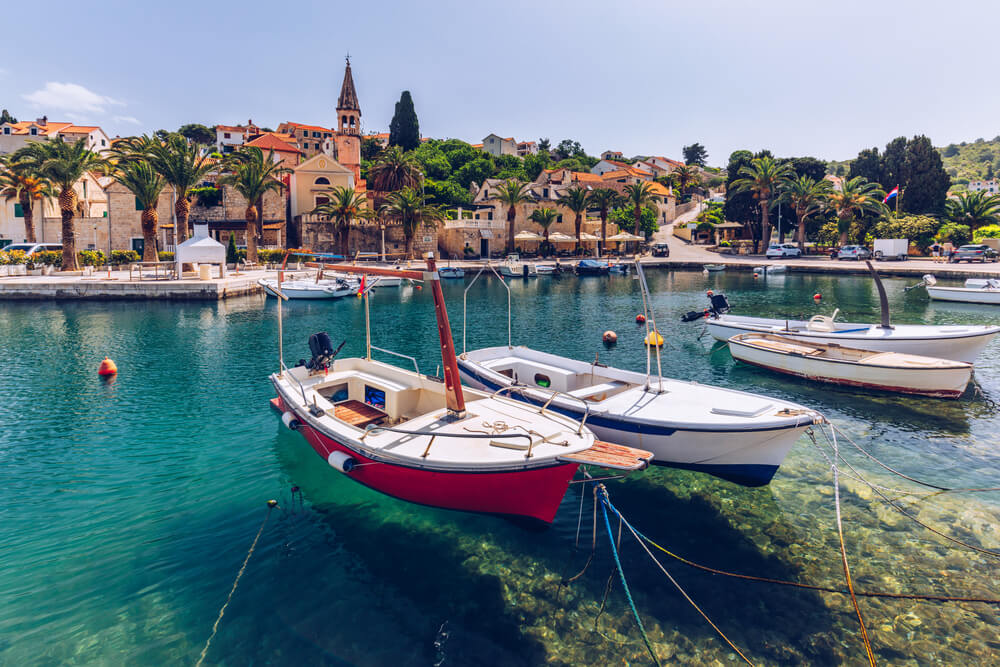
The solution is not to avoid Dalmatia. It is to arrive in June, use Dubrovnik as the southern anchor, and spend most of your time on the places between Split and the border that do not yet have visitor caps because they have not needed them. Trogir, Hvar, Korčula, Vis, Makarska — each one is different, each reachable from Split, and in June the Adriatic water temperature sits at 22-24°C, the crowds are manageable, and a table at a konoba by the water does not require a booking made in February.

Dalmatia also has the Game of Thrones effect working in its favour beyond Dubrovnik. Trogir’s old town has been filmed as a stand-in for various medieval cities. Split’s Diocletian’s Palace — a Roman emperor’s retirement home turned living city — is one of the most extraordinary pieces of inhabited architecture in Europe, and the walking tour through it covers ground that no bus can reach.

The Dalmatian coast in June — how to move through it

Day 1–2
Split — Diocletian’s Palace and Trogir
Land in Split. The Diocletian’s Palace is not beside the city — it is the city centre. People live and work inside a Roman emperor’s walls. The audio tour covers the palace’s evolution from imperial retreat to medieval town. Trogir is 30 minutes west by bus: an island connected by two bridges, with a UNESCO old town small enough to walk in 45 minutes and beautiful enough to justify staying the night.
Day 3–4
Hvar or Vis by ferry
Hvar gets crowded in August. In June it is accessible. Vis is quieter still — the island was closed to foreign visitors until 1989 and has developed slowly and deliberately since. Both are under two hours from Split by catamaran. Wingman’s Dalmatia tours cover both island routes with walking itineraries.
Day 5–6
Korčula and the coast road south
Korčula claims to be Marco Polo’s birthplace. The Old Town is a smaller, less crowded version of Dubrovnik’s, built on a narrow peninsula with the sea on three sides. The bus south along the Pelješac Peninsula takes you through vineyards producing Plavac Mali — Croatia’s answer to Zinfandel — before the Dubrovnik bridge.
Day 7
Dubrovnik — early morning or late evening only
Arrive before the cruise ships dock (before 9am) or after they leave (after 6pm). The Old Town in summer morning light with no crowd is the Dubrovnik the photographs promised. Wingman’s Dubrovnik tour covers the walls and the main streets with audio context at each significant gate and tower.

Where to go in Dalmatia beyond the obvious

Diocletian’s Palace, Split
A Roman palace that became a medieval town. People live inside it. The Wingman audio tour explains how — and it is genuinely one of the stranger histories in Europe.
History + Audio
Trogir Old Town
UNESCO island town, 30 minutes from Split. Small enough to walk end to end in 45 minutes, well-preserved enough to justify the detour entirely.
Architecture
Vis island
The quietest inhabited island on the Dalmatian coast. Closed to outsiders until 1989, still developing slowly. Two hours from Split by catamaran.
Islands
Korčula
Medieval old town on a peninsula. The less-visited alternative to Dubrovnik’s old town — same architectural quality, a fraction of the crowd.
History
Makarska Riviera
The stretch of coast between Split and Dubrovnik with Biokovo mountain behind it. In June the beaches are uncrowded and the mountain walking trails are open.
Nature + Coast
Dubrovnik walls, early morning
The 2km wall walk around the old city. Before 9am in June, it has the light and almost none of the crowd it will have by noon. The ticket office opens at 8am.
Views

Dalmatia from Split to Dubrovnik. Already planned.

Wingman has 12 English audio tours across Dalmatia — Diocletian’s Palace walking route, Trogir old town, Hvar, Korčula, and Dubrovnik walls. Generate your full coast itinerary in 45 seconds. Day-by-day routes, ferry connections, local food tips. Completely free.

Download Wingman
Best base city
Split for the northern coast and islands. Fly in, travel south by ferry and bus, fly out of Dubrovnik.
Getting around
Jadrolinija ferries connect the islands. Split–Dubrovnik bus runs the coastal road in 4.5 hours. No car needed for the island route.
June weather
25–27°C coastal, Adriatic at 22–24°C — warm enough to swim, cool enough to walk. Dry season. Long evenings until 9pm.
Budget indicator
Croatia in June runs 15–25% cheaper than August. Wingman’s budget breakdown covers Split, Hvar, Korčula and Dubrovnik separately.

Peak versus shoulder: what actually changes

The argument for June over August is not about weather preferences. It is about what you can actually do once you are there.

August (peak)
June (shoulder)
Alhambra sold out 3+ weeks in advance
Alhambra bookable within a week
Dubrovnik Old Town hits daily visitor cap by midday
Dubrovnik walkable all day, cap rarely reached
Hvar marina: wall-to-wall yachts, restaurants booked out
Hvar: tables available, harbour still photogenic
Seville: 38°C afternoons, outdoor sightseeing impractical
Seville: 26°C, full day of walking comfortable
Flights and hotels 25–40% more expensive
Same routes and hotels, lower prices
Adriatic at 26°C but unswimmable in crowds
Adriatic at 22–24°C, quiet beaches accessible

The one change that makes both trips better

Every friction point in shoulder season travel — figuring out which Andalusian towns to combine, which ferry runs from Split to which island on which day, how long the Alhambra actually takes versus how long you should budget — is a planning problem. Most people spend their pre-trip time reading articles that tell them where to go without telling them how to string it together into a day.

Wingman generates a complete, day-by-day walking itinerary for any city or region in 45 seconds. Type Seville, pick your days. Type Split, pick your days. You get mapped walking routes, distances and timings between stops, audio tours at key locations narrated by local guides, local food recommendations, transport tips, and a budget breakdown across three spending levels. Everything is free — no paywall, no premium tier, no subscription required.

If you have saved TikToks or Instagram Reels about either destination, paste the link directly into Wingman. The app reads the video and builds an itinerary from the locations in it. The content you have been saving for months becomes a usable plan in under a minute.