
World Cup 2026 Semi-Finals: Walk Paris, Madrid & London
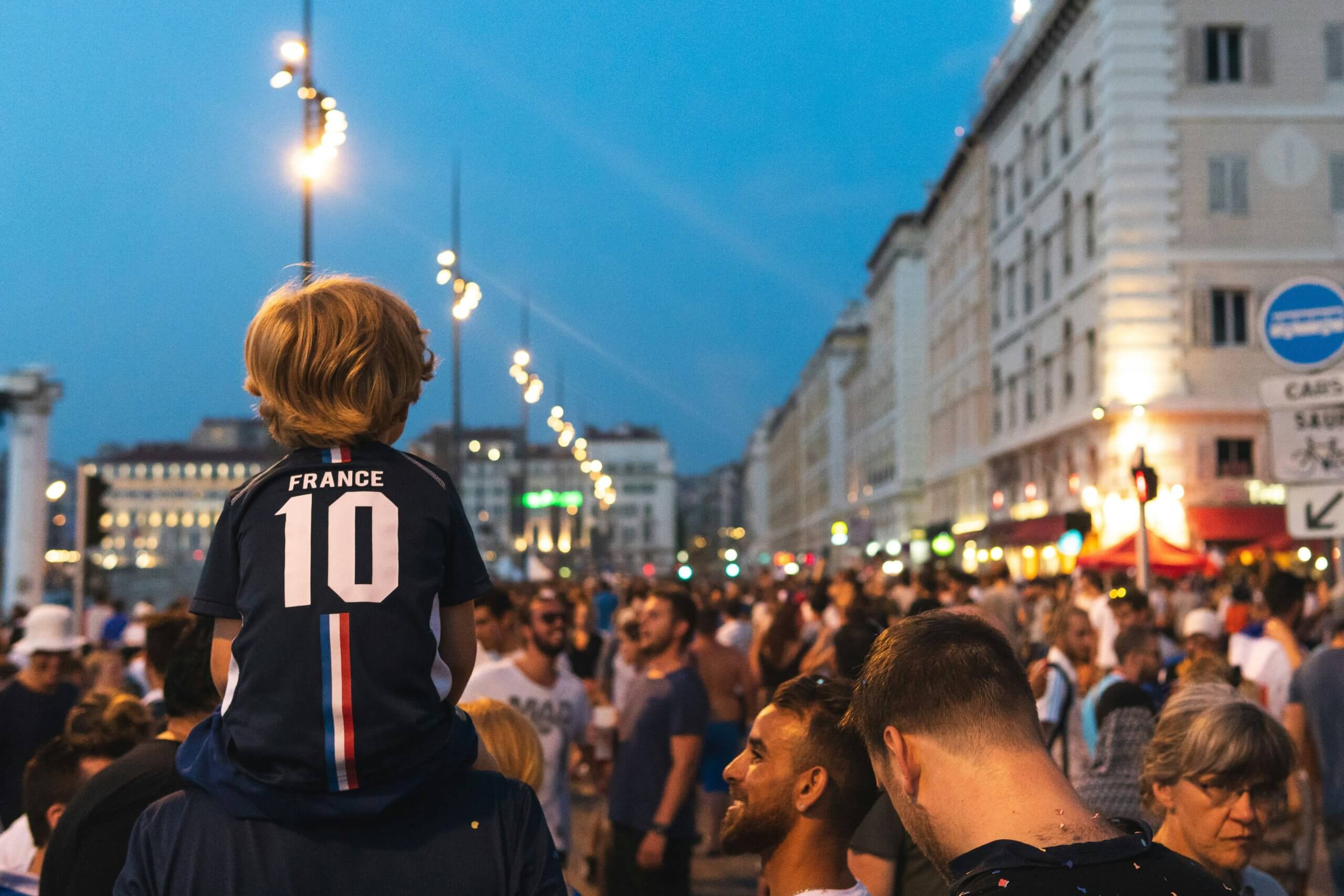
France walks out for the biggest match of its tournament tonight — July 14, Bastille Day — while Paris is already loud with fireworks, brass bands, and a million people who came out for the national holiday. The country was going to celebrate anyway. Now it has a reason to lose its mind.
This is not a match preview. We are not going to tell you who wins France vs Spain, or whether England can finally beat Argentina. This is a walk guide. Four cities are still alive in the World Cup — Paris, Madrid, Barcelona and London — and by Sunday, millions of people will have booked, or half-booked, a trip to one of them. This piece tells you what to actually do once you land.
Football is the hook. The point is the city underneath it. Every one of these places is more interesting on foot than it is on the pitch, and you don’t need a tour group of forty people to see it. You need good shoes, a rough plan, and a story in your ear as you walk.
France vs Spain, and the Bastille Day collision
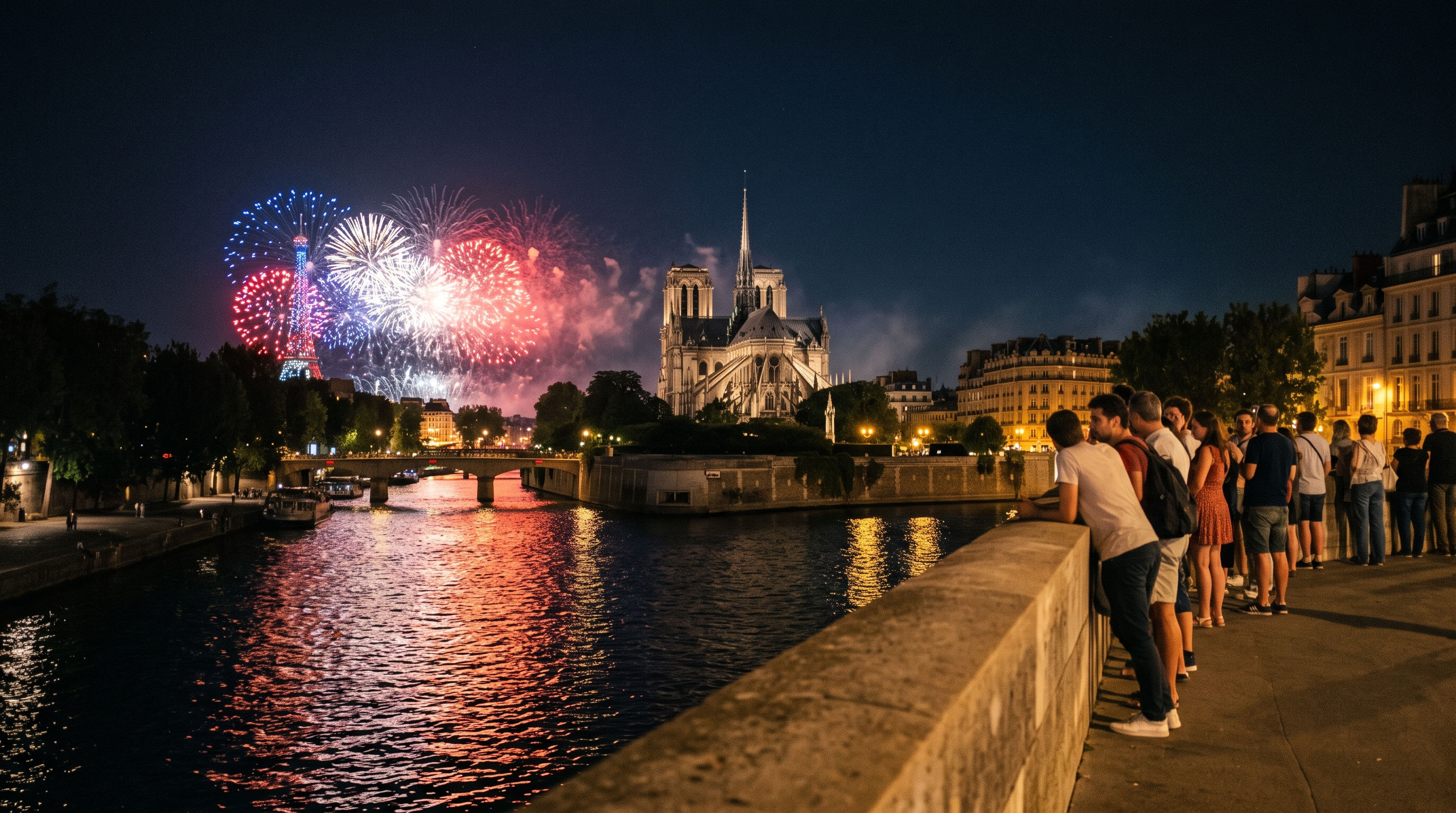
Here is the thing that makes tonight strange. July 14 is the biggest civic day in the French calendar. There is a military parade down the Champs-Élysées in the morning, free concerts on the Champ de Mars in the evening, and a fireworks display over the Eiffel Tower that draws hundreds of thousands to the Trocadéro every single year. All of that was already scheduled. The football just landed on top of it.
So if France wins, Paris does not calmly file home. The crowds are already in the streets. Spain, for what it’s worth, arrives as the reigning European champions and has quietly been the better passing side all tournament. This is a genuine coin-flip between two teams that like the ball. Whoever loses will feel it for years.
If you are the kind of traveler who books flights on emotion, tonight is the trigger. Below is what waits for you on the other side of the ticket.
How do you walk Paris without doing the tourist death march?
The mistake most first-timers make is treating Paris like a checklist — Eiffel Tower, Louvre, Arc de Triomphe, back to the hotel with sore feet and no memory of the streets in between. The streets in between are the whole point. Paris rewards wandering more than almost any city in Europe, and July is the month for it: long evenings, sunset near 21:45, café terraces open until midnight.
If it’s your first trip, start with City of Lights in a Day to get your bearings, then break away into the neighborhoods. Montmartre in the north still climbs like a village, and the walk up to Sacré-Cœur through the back lanes beats the tourist steps every time. For the moodier, literary side of the city, the Left Bank cafés and old bookshops are their own afternoon.
City of Lights in a Day
The efficient loop through the landmarks so you’re not guessing, with the stories that make them stick. Do this on day one.
Exploring Montmartre
Up the quiet lanes to Sacré-Cœur, past the last vineyard in Paris. Go early morning before the crowds reach the summit.
Bohemian Paris
The artists’ and writers’ Paris on the Left Bank. Cafés, bookshops, and the corners where the myths were actually made.
Hidden Charms of Paris
Covered passages, quiet courtyards, streets the tour buses can’t fit down. This is where the city stops performing.
Paris in Focus: Must-See Marvels
The big sights done properly, with context you’ll actually repeat at dinner. Good for a focused half-day.
Dive into France’s history
From revolution to republic, walked through the places it happened. Fitting, given what July 14 means here.
Rendezvous in the city of love
A slower route built for two, along the Seine and the bridges. Time it for the golden hour before 22:00.
Bon Appétit Paris — Bistros & Baguettes
Where to eat without getting fleeced. Real bistros, honest bakeries, and how to order like you’ve done it before.
One honest warning: central Paris in mid-July is hot and busy, and this year the crowds are worse because of the tournament. Highs sit around 26–28°C, the Métro gets stuffy, and the queue for the Eiffel Tower can top two hours. Walk in the morning and after 19:00, drink more water than you think you need, and skip the lift — the stairs up to the second floor are cheaper and the view is the same.
Madrid and Barcelona pull in different directions
Spain is in the semi-final, but Spain doesn’t have one city — it has two that don’t quite agree with each other. Madrid is landlocked, formal, and stays up impossibly late. Barcelona is coastal, restless, and half of it doesn’t consider itself Spanish at all. If Spain wins tonight, both cities erupt in completely different accents.
Madrid is the football capital in the plainest sense. When the national team plays, the bars around Plaza Mayor and La Latina fill by mid-afternoon, and the Cheer like the true Madrileños walk leans straight into that — it’s built for exactly this kind of night. Barcelona answers with the Barça Expedition, which threads the club’s history through the city that treats football as identity, not just sport.
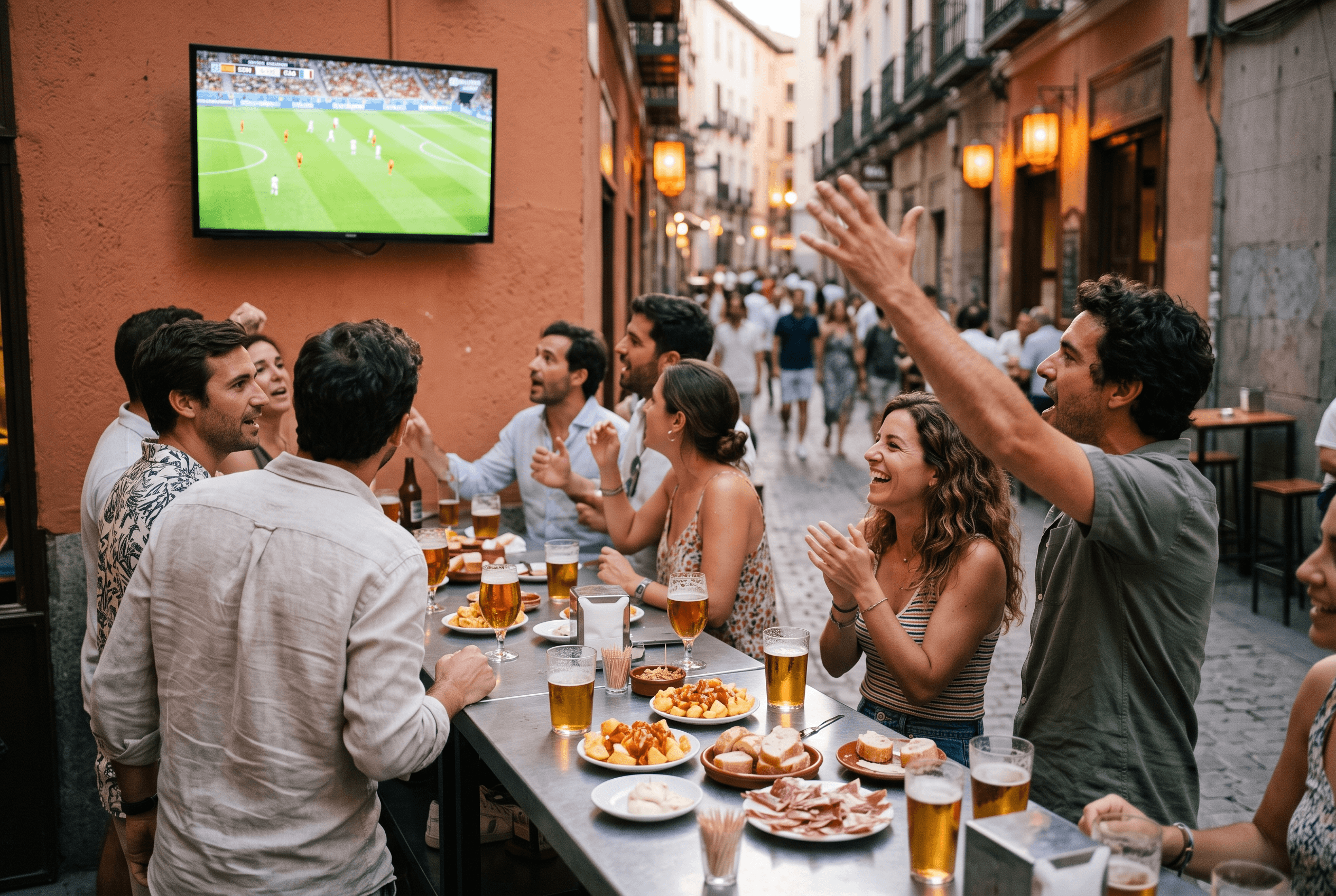
In Madrid, the old center is walkable end to end. Start at the Royal Palace, cut through to Plaza Mayor, and drop into La Latina for the tapas crawl the locals actually do — Cava Baja is the street, Sunday is the day, and vermút before lunch is the tradition. The museums here are world-class and cheap: the Prado is free in the last two hours most evenings, though expect a line.
Cheer like the true Madrileños
The route through the bars and squares where the city watches its team. Perfect for tonight, whatever the result.
La Latina
The old quarter’s tapas maze around Cava Baja. Go hungry, go slow, and let one bar lead to the next.
Palace to Plaza Adventure
From the Royal Palace to Plaza Mayor through the historic core. The clean first-day loop for the center.
From Pharaohs to Flamenco
Madrid’s stranger, more mixed side, from an Egyptian temple to the sound of flamenco. A different afternoon.
Barcelona is the other half of the story, and it wants nothing to do with a checklist. Gaudí is unavoidable and worth it — the Sagrada Família is genuinely unlike anything else, but book a timed slot online or you will not get in during July. Away from the queues, the Gothic Quarter is a maze best walked with a guide in your ear, and the food scene runs from market stalls to long lunches by the water.
Gaudí’s Barcelona
Sagrada Família, Park Güell, Casa Batlló, tied together by the man who bent the whole city. Book your slots first.
Barça Expedition
The club as the soul of the city. History, rivalry, and identity, walked through the streets that carry it.
A Time Traveler’s Trip in the Gothic Quarter
Roman walls, medieval lanes, hidden squares. The oldest part of the city, best done without a map in hand.
Catalan Rhythms
The Catalan side of Barcelona — language, music, and the traditions that set it apart from the rest of Spain.
Barcelona Bites
Market stalls, vermouth bars, and where to eat away from the Rambla tourist traps. Come with an appetite.
The heat is real here too. Barcelona in July runs 28–30°C with humidity off the sea, so pace the day: sights in the morning, a long lunch, the beach or a shaded plaza in the afternoon, and the streets again after 20:00 when the city wakes back up.
Turn tonight’s dream into an actual route
Wingman has 700+ self-guided audio tours across 150+ European cities, all made by real local guides. Drop a saved Reel or TikTok in and the app builds a walkable plan with stops, stories, and breaks. No group, no schedule, no forty strangers. Free to download.
Get Wingman freeEngland vs Argentina, and a wound that never fully healed
Tomorrow night carries more history than any other fixture in the tournament. England and Argentina have met at four previous World Cups, and one of those games rewrote the sport. In 1986, in Mexico City, Diego Maradona scored twice in four minutes — the “Hand of God” punch he never apologized for, then a solo run past half the England team that is still called the greatest goal ever scored. England went home. Argentina won the trophy.
Every meeting since has been read through that afternoon. There was the David Beckham red card in 1998, the penalty shootout heartbreak, the sense on the English side that this is the one they owe. Now they meet in a semi-final, with Wembley dreams on the line and a nation that has spent decades saying “it’s coming home” without it ever quite arriving.
Mexico City — the two goals
Maradona’s handball, then his run past five England players. Argentina wins the quarter-final and, later, the cup.
Saint-Étienne — Beckham sees red
A young Beckham is sent off, England lose on penalties, and the rivalry gains another scar.
Sapporo — Beckham’s revenge
A single penalty from the same man knocks Argentina out of the group stage. Some of the debt repaid.
Tomorrow — the semi-final
The winner plays for the World Cup. For England, a chance to make forty years of “coming home” finally mean something.
Whatever happens, London will be full. Pubs open early, the good ones fill hours before kickoff, and the city has a way of holding its breath together. Which brings us to the last walk.
What’s the best way to see London on foot?
London is too big to walk in a day, so don’t try. Pick a couple of areas and do them properly. The historic core — from the Tower to St Paul’s to Westminster — is the obvious first day, and 1 day in London stitches those landmarks into a route that actually makes sense on foot instead of sending you back and forth across the river.
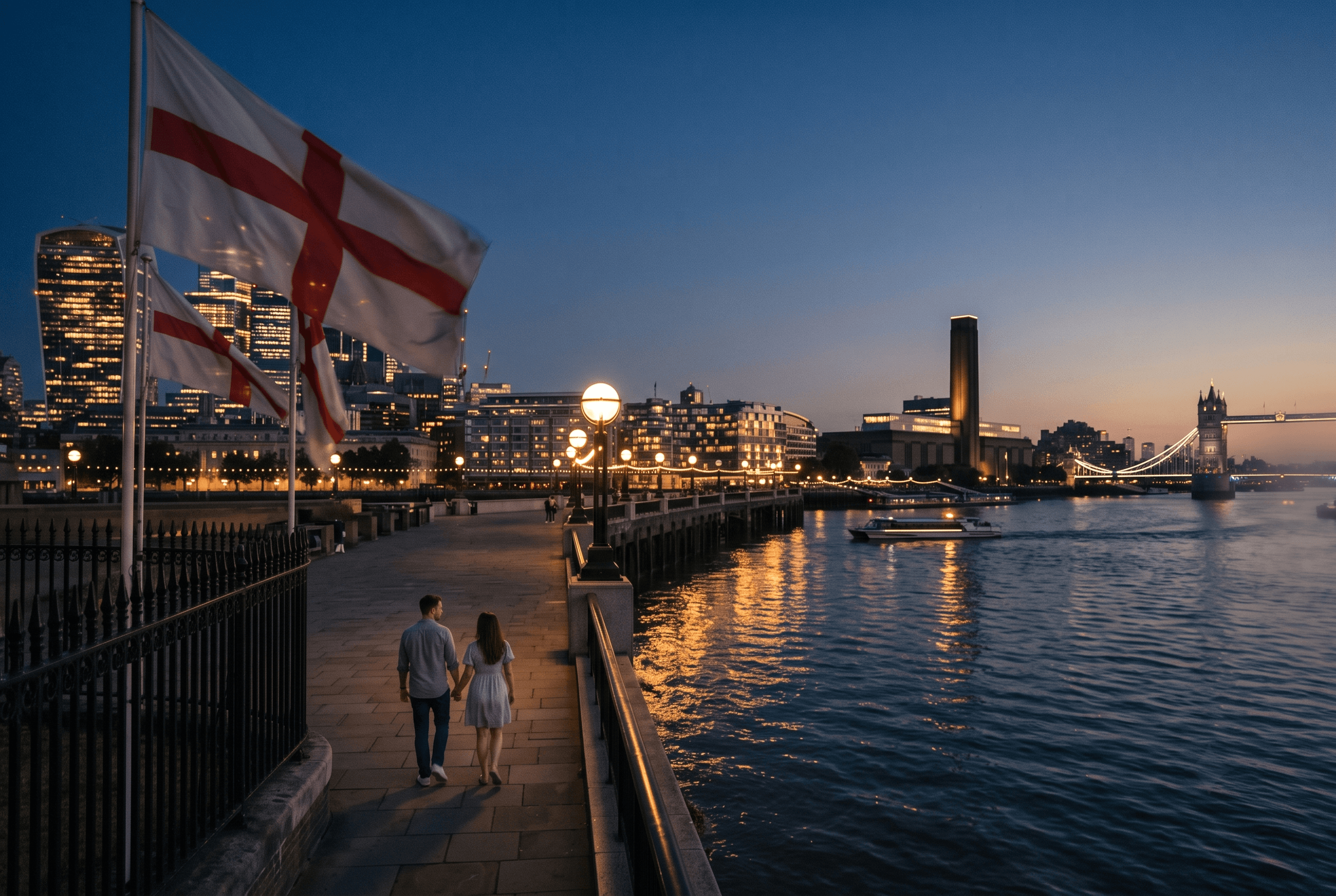
The Thames is the spine of the city, and the walk along the South Bank at dusk is one of the best free things London offers: the London Eye, the Globe, Tate Modern, and the lit-up skyline across the water. On a semi-final night, expect flags, singing, and the low roar of a hundred pubs when something happens on screen.
1 day in London
The core landmarks in one sensible loop, so you’re not doubling back. The right way to spend day one.
Royal London
Buckingham Palace, the parks, and the pageantry, with the stories behind the crown. Time it near the guard change.
Walk along the River Thames
The South Bank spine from Westminster east. Best at dusk, and free the whole way along.
Discover Notting Hill
Pastel houses, the Portobello market, and the quieter west London that the postcards flatten. Saturday for the stalls.
Old Town with Skyscrapers
The City, where Roman walls meet glass towers. A short, dense walk through two thousand years in a few streets.
The Titans of London’s Music Scene
Abbey Road, Soho clubs, the studios and venues that built British music. For anyone who came for the sound.
London in July is milder than the Mediterranean cities — highs around 23°C, with a real chance of rain on any given afternoon, so pack a light layer even in summer. The upside: the long daylight runs past 21:00, and the parks and river walks are at their best.
So which city do you actually book first?
If you’re moving on emotion, go where you already feel it — book the city of the team you’re screaming for this weekend. But if you’re asking which of the four is the best trip on its own terms, the honest answer is Paris, and it isn’t especially close. It has the most walkable center, the longest summer evenings, and this week it has the story: a country celebrating its founding myth and its football team on the same night. That combination doesn’t repeat.
Madrid is the pick if you want late nights and cheap, brilliant food. Barcelona if you want beach and Gaudí in the same day. London if the language barrier scares you and you want the widest range of things to do. But start with Paris while the fireworks are still fresh, then let the tournament decide the rest. Whatever you book, download the walks before you fly, and let the city talk you through itself once you’re on the ground.