
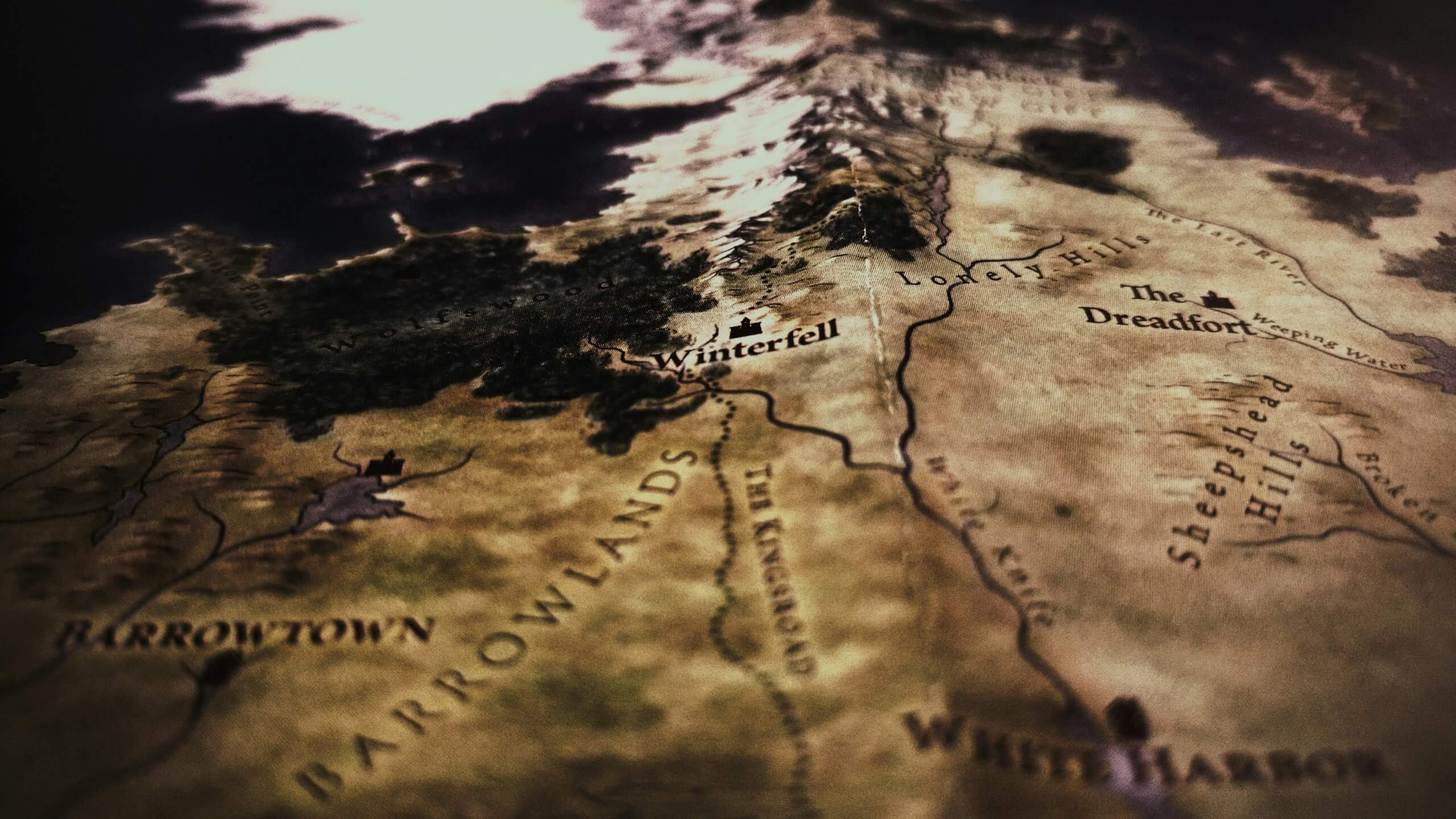
Every Game of Thrones Filming Location You Can Actually Walk. We Mapped Ten of Them. | Wingman
Game of Thrones filmed across seven countries, used more than forty real locations, and turned a Croatian port city into one of the most visited places in Europe. Seven years after the finale, the locations are still drawing hundreds of thousands of visitors a year. The show ended. The cities did not.
What makes GoT tourism different from most set-jetting is that the filming locations are genuinely extraordinary places in their own right. Dubrovnik’s walls were not built for a television show — they were completed in the 16th century to defend a republic. The Alcázar of Seville is a working royal palace, not a set. Diocletian’s Palace in Split was a Roman emperor’s retirement home before it became a dragon prison. The show borrowed these places because they were already remarkable. Visiting them for the show and discovering the real history is not a compromise — it is the trip working on two levels at once.
Wingman has dedicated Game of Thrones audio tours in three of these locations and city-guide tours in seven more. Here is every major filming location you can walk, what it was in Westeros, and what it actually is.
Westeros vs. reality — every major location
| In Westeros | In reality | Country | Wingman |
|---|---|---|---|
| King’s Landing (S2–8) | Dubrovnik old town | Croatia | GoT audio tour |
| Meereen — dragon dungeon | Diocletian’s Palace, Split | Croatia | 16 Dalmatia tours |
| Braavos — Iron Bank | Šibenik (St. James Cathedral) | Croatia | 16 Dalmatia tours |
| Winterfell — Castle Ward, Paint Hall | Belfast + Co. Down | N. Ireland | GoT audio tour |
| Dragonstone — exterior | San Juan de Gaztelugatxe | Basque Country | GoT audio tour |
| Dorne — Water Gardens | Alcázar of Seville | Spain | 12 Andalusia tours |
| Braavos / Oldtown (S6) | Girona (near Barcelona) | Spain | 8 Barcelona tours |
| Long Bridge of Volantis | Roman Bridge, Córdoba | Spain | Córdoba Through the Ages |
| Beyond the Wall | Vatnajökull, Þingvellir | Iceland | 4 Iceland tours |
| King’s Landing (S1) | Mdina + Fort Ricasoli | Malta | 2 Malta tours |
| Astapor / Yunkai / Pentos | Essaouira, Aït Benhaddou | Morocco | Coming soon |
The show borrowed these places because they were already remarkable. The walls of Dubrovnik were not built for television. They were completed in the 16th century to defend a republic that lasted longer than most European monarchies.
Ten locations. What they were. What they are.
The street Cersei Lannister walked barefoot through a jeering crowd is the Stradun, Dubrovnik’s main limestone thoroughfare. Fort Lovrijenac — the fortress on the cliff outside the western wall — became the Red Keep. The old harbour below the city walls stood in for the dramatic Battle of Blackwater Bay. The steps of the Jesuit Church of St. Ignatius are the exact steps of the Walk of Shame.
Wingman’s Walk Through Westeros audio tour is our most-requested tour outside of London. It walks the filming route through the old town — Cersei’s path, Fort Lovrijenac, the harbour, and the wall walk — narrating both the show’s scenes and the city’s own 1,400-year history. The walls themselves predate the show by half a millennium.
The basement vaults of Diocletian’s Palace — a 4th-century Roman emperor’s retirement compound that became a living city — served as the dungeon where Daenerys chained her dragons. The columns and arches you walk through in Split’s old town are the same ones the camera moved through in Meereen. The palace was not a set; it is a Roman building that 3,000 people still live inside.
Wingman’s Split tours cover the palace complex with full Roman-era context — Diocletian’s construction project, the medieval transformation into a city, and the modern street life that occupies the same spaces the show used for Essos.
Belfast’s Paint Hall studios — now the Game of Thrones Studio Tour at Linen Mill Studios — housed the interior sets for all eight seasons. Castle Ward in County Down, thirty minutes south, was Winterfell’s exterior in Season 1. The Dark Hedges, a tunnel of intertwined beech trees planted in the 18th century, became the Kingsroad. Ballintoy Harbour on the north coast stood in for the Iron Islands.
Wingman’s Thrones of the North audio tour covers the Belfast and Northern Ireland circuit — the studio locations, the Causeway Coast route that passes Dunluce Castle (House Greyjoy), and the landscape that made the North feel genuinely northern. Northern Ireland remains one of the most undervisited countries in Europe for its quality.
San Juan de Gaztelugatxe — a tiny island connected to the Basque coast by a stone bridge with 241 steps — became the exterior of Dragonstone, the volcanic island fortress where Daenerys arrives in Season 7. The winding stairway shot that opens the season, with Daenerys climbing toward her ancestral home, is the real path up to the hermitage on the island’s summit. Itzurun Beach in Zumaia was used for the beach scenes at the base of Dragonstone.
Wingman’s The Real-Life Dragonstone tour covers the coastal route with the filming locations mapped and narrated — the approach, the stairway, and the geological formations (flysch cliffs dating back 60 million years) that made the coastline look volcanic enough for a dragon fortress.
The Alcázar of Seville — a Mudéjar palace that is still a working royal residence — became the Water Gardens of Dorne, seat of House Martell. The underground baths of Doña María de Padilla, a 12th-century rainwater cistern beneath the palace, were used for the scene where Ellaria Sand and the Sand Snakes plot the death of Myrcella. The gardens above are the same gardens where Jaime confronts the Dornish in Season 5.
Wingman’s 12 Andalusia tours cover Seville, including the flamenco quarter of Triana and the complete Alcázar route with Mudéjar architectural context — the layers of Muslim, Christian, and Renaissance building that made the palace look like a fantasy setting because it genuinely is one.
The Cathedral of St. James in Šibenik — a 15th-century UNESCO World Heritage site built entirely of stone without mortar or wood — served as the exterior of the Iron Bank of Braavos. The cathedral’s west facade and the steps leading to it are recognisable from Arya’s Braavos scenes. Šibenik is smaller, quieter, and significantly less visited than Dubrovnik, which is precisely why it rewards a visit.
Girona’s medieval quarter was used extensively in Season 6. The Girona Cathedral became the Great Sept of Baelor — the site of Cersei’s explosive plot in the season finale. The narrow alleys of the Jewish Quarter stood in for the streets of Braavos where Arya trained with the Faceless Men. The Arab Baths became the interior of the Citadel in Oldtown. Girona is 38 minutes from Barcelona by high-speed train, making it a natural day trip from any Barcelona-based itinerary.
The Roman Bridge of Córdoba — 16 arches spanning the Guadalquivir, originally built in the 1st century BC — became the Long Bridge of Volantis. The Mezquita-Catedral visible from the bridge is not a GoT location, but it is one of the most extraordinary buildings in Europe: 856 columns, double-tiered arches, and a Renaissance cathedral physically inserted into the centre of an 8th-century mosque. Wingman’s Córdoba Through the Ages tour covers both the bridge and the Mezquita.
Iceland provided almost everything north of the Wall. Vatnajökull National Park’s glaciers were the White Walker landscape. Þingvellir National Park — already a UNESCO site for its role in Viking-era parliament — served as the Hound and Arya’s route to the Eyrie and the setting for the Hound vs. Brienne fight. Grjótagjá, a geothermal cave in northern Iceland, is where Jon Snow and Ygritte fell in love in Season 3.
Wingman’s four Iceland tours cover the Golden Circle (which passes Þingvellir), the Fire and Ice geological route, and the sustainable Reykjavik walk. The GoT locations sit along the same natural circuit most visitors drive anyway.
Before Dubrovnik, there was Malta. The Season 1 budget was smaller and the production filmed in the fortified city of Mdina (King’s Landing streets), Fort Ricasoli (Red Keep exteriors), and the Azure Window on Gozo (Daenerys and Khal Drogo’s wedding), which collapsed into the sea in 2017. Fort St. Angelo in Birgu provided the dungeon scenes. Wingman’s two Malta tours cover Mdina and Valletta — the former is the ancient capital that gave King’s Landing its first streets, the latter is the Valletta walking route through the Knights of St. John’s fortified harbour city.
Walk Through Westeros. Then walk through the real city.
Three dedicated Game of Thrones audio tours — Dubrovnik, Belfast, Basque Country — plus city guides in Split, Šibenik, Seville, Córdoba, Barcelona, Iceland, and Malta. All free. All in seven languages.
Download WingmanThe difference between a GoT tour and a GoT trip
Most GoT tourism follows a standard pattern: arrive in Dubrovnik, take a guided walking tour of the filming locations, photograph the steps of the Walk of Shame, leave. The pattern works — it is fun, the guides are good, and the city is beautiful. But it is also incomplete. Dubrovnik has 1,400 years of history that the show compressed into a backdrop for a fictional monarchy. Split has a Roman palace where 3,000 people live inside the walls of a building constructed for one man. Seville has a Moorish palace that is more elaborate than anything the show’s production designers could have invented.
The value of Wingman’s GoT audio tours is that they tell both stories — the show’s and the city’s — on the same walk. You hear about Cersei’s path and you hear about the Republic of Ragusa that built the walls she walked along. You hear about Dragonstone and you hear about the 60-million-year-old flysch cliffs that made the coastline look volcanic. The show is the hook. The city is the trip.
Seven countries, forty locations, ten cities with Wingman audio tours. The show ended seven years ago. The walk has not.