Europe’s Festival Season Peaks Between Mid-August and September. Here Is the Calendar. | Wingman
Between the middle of August and the end of September, Europe runs the densest six weeks of festivals anywhere in the world. A tomato fight in a Valencian village. The largest arts festival on earth, in Scotland. A film festival on a Venetian sandbar. Six million people in Munich. Here are the dates that matter, what they cost, and how to plan the city around the event instead of the other way around.
Festival travel has a specific failure mode. You book the event, you show up, you spend three days inside a venue or a crowd, and you leave having seen almost nothing of the place hosting it. The Fringe visitor who never walks up Arthur’s Seat. The Oktoberfest tourist whose entire memory of Munich is a tent. The Venice Film Festival attendee who never gets off the Lido.
The fix is not complicated — it is a matter of knowing which mornings are free, which neighbourhoods empty out while everyone is at the main event, and what is worth walking to when the programme has a gap. That is the part this guide covers, alongside the dates themselves.
Mid-August to end of September, in date order
Every festival below runs at some point between 13 August and 30 September 2026. The right-hand column shows whether Wingman has audio tours for the host city — useful for the hours the programme does not fill.
| Dates | Festival | City | Wingman |
|---|---|---|---|
| 7–31 Aug | Edinburgh Festival Fringe | Edinburgh, Scotland | 3 tours |
| Mid-Aug | Edinburgh International Festival + Military Tattoo | Edinburgh, Scotland | 3 tours |
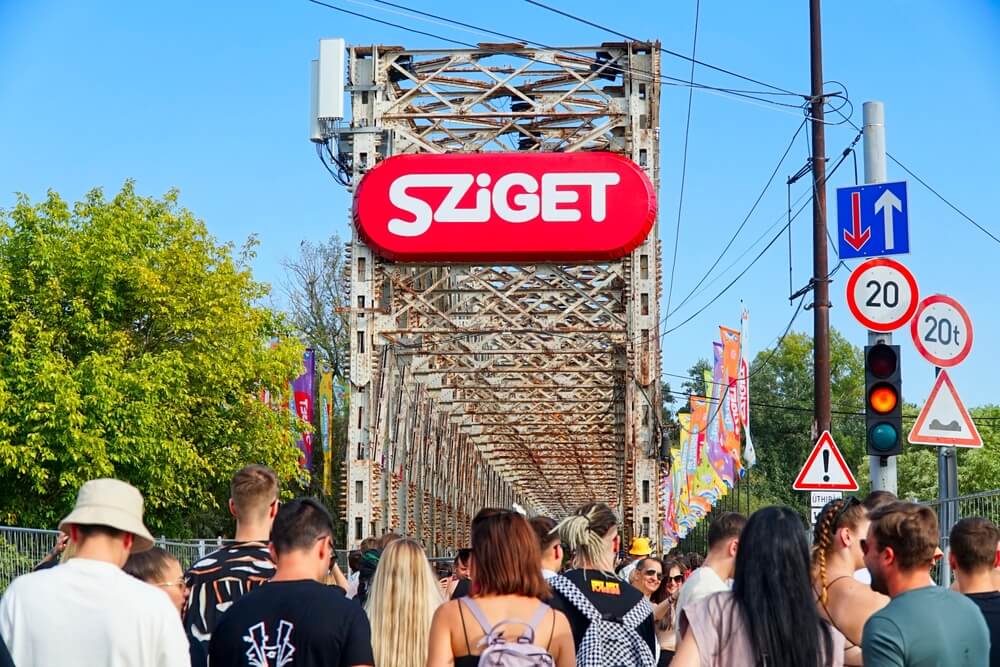
| Mid-Aug | Sziget Festival | Budapest, Hungary | 38 tours |
| 15 Aug | Ferragosto — national holiday, coastal festivities | Italy, nationwide | Many cities |
| 26 Aug | La Tomatina | Buñol, near Valencia, Spain | Nearest: Barcelona |
| Late Aug | Creamfields | Cheshire, England | Nearest: Liverpool |
| 2–12 Sep | Venice International Film Festival (83rd) | Lido di Venezia, Italy | 11 tours |
| Early Sep | Corrida Goyesca — historic bullring festival | Ronda, Andalusia, Spain | 12 regional |
| 19 Sep – 4 Oct | Oktoberfest | Munich, Germany | 6 tours |
| 20–26 Sep | Fiesta de San Mateo — grape harvest | Logroño, La Rioja, Spain | Nearest: Basque Country |
| Late Sep | San Sebastián International Film Festival | San Sebastián, Spain | 8 Basque tours |
| 23–27 Sep | La Mercè — human towers, fire runs | Barcelona, Spain | 8 tours |
| 24 Sep – 4 Oct | Zurich Film Festival | Zurich, Switzerland | 2 tours |
| 25–27 Sep | Feria de San Miguel | Seville, Spain | 12 Andalusia |
Two patterns are worth noticing before the detail. First, August is concentrated in the north and September in the south — which tracks the weather almost exactly. Second, the September cluster in Spain is not a coincidence: it is grape harvest season, and half of those festivals began as agricultural celebrations before they became things people fly in for.
The five that shape the calendar
The Fringe began in 1947 when eight theatre companies turned up uninvited to the first Edinburgh International Festival and performed anyway. Nearly eight decades later it is the largest performing arts festival in the world — the 2025 edition sold more than 2.6 million tickets across 53,942 performances of 3,893 shows, with participants from 68 countries.
The scale is the point and also the problem. Nobody sees the Fringe; everybody sees a fraction of it and calls it the Fringe. The people who enjoy it most tend to book two or three things they actually want, then leave the rest of the day open for whatever they walk past on the Royal Mile.
What most visitors miss is that Edinburgh in August is running three festivals at once. The Fringe is the loud one. The Edinburgh International Festival — the curated original, with opera, classical music and theatre — runs alongside it, and the Royal Edinburgh Military Tattoo performs nightly on the Castle esplanade. Tattoo tickets go months in advance and run £40 to £330.
The world’s largest food fight lasts exactly one hour. It started in the 1940s as a spontaneous scuffle between friends during a local festival, and the town liked it enough to keep doing it. Now it draws thousands of visitors to a village of around 9,000 people, and requires a ticket — which usually bundles transport from Valencia and back.
The practical advice is unusually specific for a festival: wear clothes you will throw away, wear closed-toe shoes, and bring goggles if you value your eyesight. Tomato pulp is acidic and the crowd is tight. It is genuinely fun and genuinely messy, and it is over by lunchtime — which leaves the entire rest of the day, and most people have not thought about that part at all.
The oldest film festival in the world runs its 83rd edition this September on the Lido, the long sandbar that separates the Venetian lagoon from the Adriatic. It is often assumed to be a closed industry event. It is not — public screening reservations open in late August, and a substantial share of the programme is accessible to anyone who plans ahead.
September is also, separately, one of the best months to be in Venice. The August heat has broken, the day-tripper volume drops after the summer peak, and the light on the water in early autumn is the thing painters kept coming back for. The festival is on the Lido; the city is twenty minutes away by vaporetto and largely unaffected.
Oktoberfest starts in September — always the third Saturday — and this is the single most common piece of confusion about it. Sixteen days, roughly six million people, and a scale that has spawned imitations on every continent.
Entry to the Theresienwiese grounds is free. What costs money is a table in a tent, and tables in the popular tents are effectively unobtainable without a reservation made months earlier. Groups without a reservation should arrive early on a weekday morning; the tents fill by late morning on weekends and stop admitting anyone.
Munich itself is where the value is for anyone spending more than two days. The Residenz, the Englischer Garten with its permanent standing wave of river surfers, the Viktualienmarkt, and Dachau an hour outside the city are all substantial. Wingman’s six Munich audio tours cover the market, the palace district, the WWII history and the Dachau memorial route.
Barcelona’s biggest street festival honours the Mare de Déu de la Mercè, patron saint of the city, and has become five days of street theatre, concerts, parades and light shows that are overwhelmingly free to attend.
The element worth planning around is the castellers — the human towers, a Catalan tradition in which teams build structures up to ten levels high with a child climbing to the top. It is genuinely astonishing to watch in person and impossible to convey in a photograph. The other signature event is the correfoc, the fire run, in which participants dressed as devils run through the streets with fireworks. Long sleeves and a hat are the standard local advice.
Late September in Barcelona also means the sea is still warm, the summer crowds have thinned, and the city is running at a temperature that makes walking pleasant again — around 25°C rather than August’s mid-thirties.
What festival timing does to prices
The single largest cost of festival travel is rarely the ticket. It is the accommodation multiplier that kicks in when a city’s entire inventory gets absorbed by an event.
The event ticket is usually the cheapest part of a festival trip. The bed is what costs, and the bed price is set entirely by how early you decided to go.
Planning the city around the festival
A festival gives you a reason to be somewhere and a schedule with holes in it. The holes are where the trip is actually made or wasted — the free morning before an afternoon show, the day between two events, the last day when the programme has ended but the flight is not until evening.
Wingman is built for exactly those hours. Type the host city, pick your days, and the app produces a walking itinerary in 45 seconds with mapped routes and timed distances — something you can slot into a gap rather than a full-day plan that competes with the festival itself.
Every festival city, already mapped.
Edinburgh, Budapest, Venice, Munich, Barcelona, Seville, Zurich, San Sebastián — 148 cities and 560+ audio tours in seven languages. Free, with no paywall on anything.
Download WingmanOne last thing about festival travel
The best festival trips people describe afterwards almost never centre on the festival. They centre on the walk back through a city at one in the morning, or the café they found on a free Tuesday, or the neighbourhood they wandered into because a show was sold out. The event is the reason to book the flight. What happens around it is usually the reason the trip was worth it.
Six weeks, fourteen major festivals, most of them in cities worth several days on their own terms. Pick the one that fits your calendar, book the bed before the price climbs, and plan the gaps.