
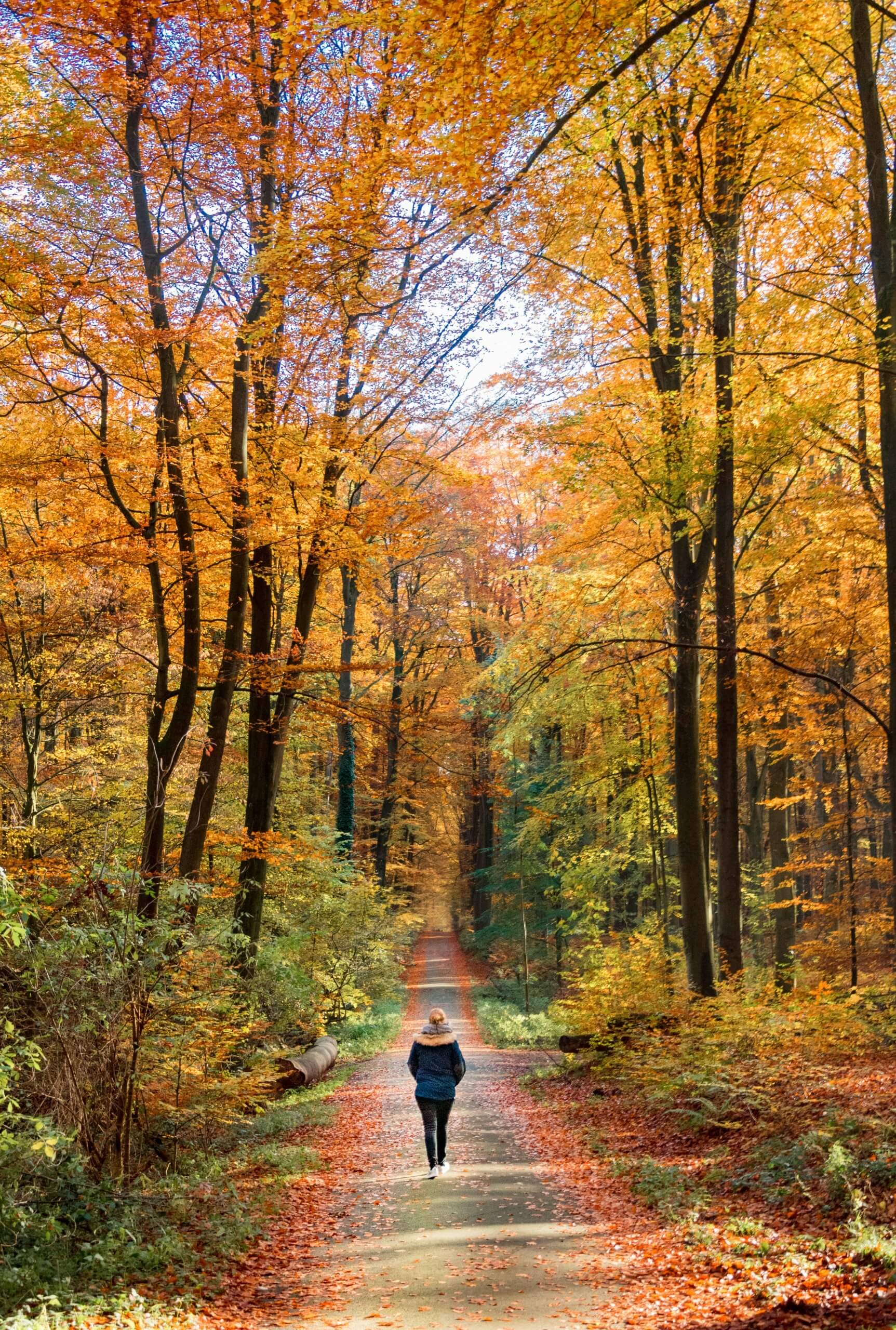
The forest starts at the tram stop: 5 autumn walks you can reach on city transport
Brussels, Vienna, Budapest, Prague and Berlin all have serious woodland inside or right next to the city. Here’s which line to take, where to get off, and when to set out before this weekend’s early sunset.
To see autumn colour in a European city without a car, take tram 44 to the Sonian Forest in Brussels, bus 38A to Kahlenberg in Vienna, bus 21A to Normafa in Budapest, the reopened Petřín funicular in Prague, or the S7 to Grunewald in Berlin. Every trip runs on the normal city network.
- 25 OctClocks go back across the EU. Sunset moves an hour earlier overnight.
- 22 SepPrague’s Petřín funicular reopened after a two-year rebuild.
- 4,421 haSize of the Sonian Forest, partly UNESCO-listed since 2017.
- 527 mJános-hegy, Budapest’s highest point, one bus ride from the centre.
Most autumn foliage guides send you to a national park two hours away by car. That’s a lovely weekend if you have the car and the weekend. If you’re in a city for three days, you need something closer.
Five capitals have it on their own transport network. A tram, a bus or a funicular gets you from a city square to beech woods, vineyards or a hill made of wartime rubble. We checked every line, stop and opening time for late October 2026, and worked out sunset times for this weekend, when the clocks change and the afternoons get an hour shorter.
In this guide
Which forest fits your day?
Tap everything you want from the afternoon. We’ll point you to the walk that fits best.
Before you go: the clocks go back on Sunday 25 October
Summer time ends at 03:00 on Sunday 25 October 2026 in every EU country. Sunset in all five cities jumps about an hour earlier overnight. In Budapest it goes from 17:42 on Saturday to 16:40 on Sunday.
A forest goes dark before the sky does, because the canopy blocks the low light first. So the useful number isn’t sunset, it’s the time you need to be walking back out. Here’s what late October and early November look like:
| City | Sat 24 Oct | Sun 25 Oct | Sun 1 Nov | Sun 8 Nov |
|---|---|---|---|---|
| Budapest | 17:42 | 16:40 | 16:29 | 16:18 |
| Vienna | 17:51 | 16:49 | 16:38 | 16:27 |
| Berlin | 17:54 | 16:52 | 16:39 | 16:26 |
| Prague | 17:55 | 16:53 | 16:41 | 16:30 |
| Brussels | 18:34 | 17:32 | 17:19 | 17:08 |
Daylight planner
Brussels: tram 44 to the Sonian Forest
The Sonian Forest (Forêt de Soignes / Zoniënwoud) covers 4,421 hectares on Brussels’ south-eastern edge, mostly beech and oak. Parts of it have been on the UNESCO World Heritage List since 2017. Tram 44 runs from Montgomery to Tervuren along the forest’s northern edge, so you step off the tram and straight into the woods.
The route
Tap a step to tick it off.
- Start at MontgomeryThe metro station on the eastern side of the city is where line 44 begins.
- Ride tram 44 towards TervurenThe line runs 9.3 km, almost all of it along the tree-lined Avenue de Tervueren / Tervurenlaan.
- Get off at Vier ArmenWikivoyage recommends this stop for the eastern side of the forest. Walk south onto the marked paths.
- Finish in TervurenRide on to the terminus for the park and the AfricaMuseum, or take 44 back to Montgomery.
Why the tram itself is worth it: Belgian public broadcaster VRT called line 44 “without doubt the most picturesque” route on the Brussels network. Its track and overhead lines were renewed between 2023 and 2025.
Watch out: the forest is bigger than it looks. Download the route before you lose signal under the canopy.
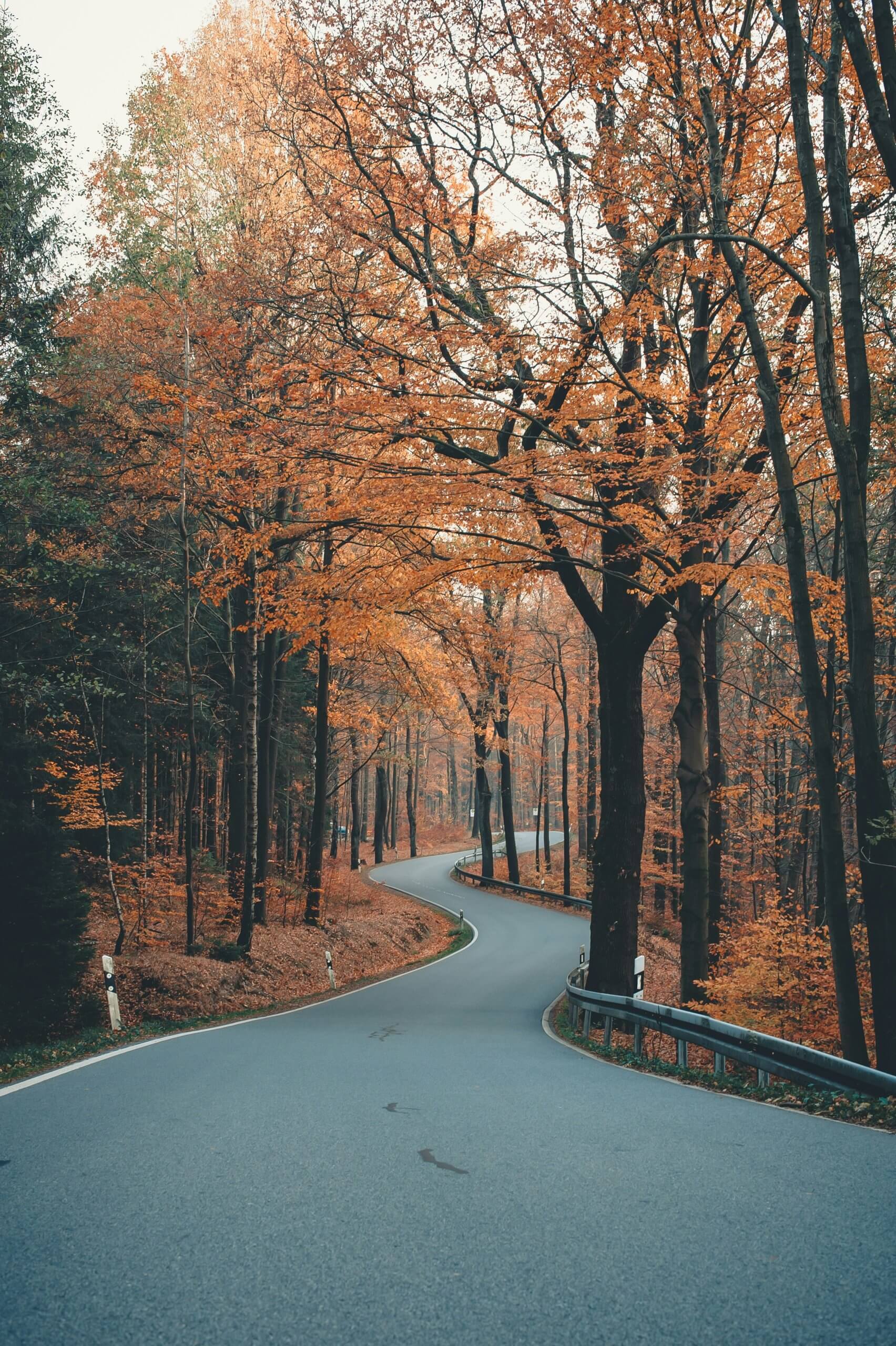
Vienna: bus 38A up Kahlenberg, then walk down through the vineyards
Kahlenberg is a 484-metre hill at the edge of the Vienna Woods, inside city limits. Bus 38A climbs there from Heiligenstadt (U4) in under 30 minutes, via Grinzing. From the top, City Hiking Trail 1 leads down through vineyards and wine taverns to Nussdorf, where tram D takes you back into town.
The route
Tap a step to tick it off.
- Take the U4 to HeiligenstadtThe bus stop for 38A is at the station.
- Bus 38A to KahlenbergSeveral buses an hour, more at weekends. The ride takes under 30 minutes.
- Stop at the terraceBetween Café Kahlenberg and the Skyline restaurant you see the city, the Danube and, on clear days, the Schneeberg.
- Walk down on City Hiking Trail 1Follow the signs through the vineyards towards Nussdorf. Allow 1 to 2 hours, depending on stops.
- Tram D back to the RingNussdorf is the end of the line, so you board at the first stop.
The full loop: Trail 1 is an 11 km circuit that starts and ends at the tram D terminus in Nussdorf. Walk it the other way if you’d rather earn the view.
Wine taverns: Heurigen open on rotating days, especially out of season. Check before you plan lunch around one.
Budapest: bus 21A to Normafa and the city’s highest point
The Buda Hills start where the city buses end. From Széll Kálmán tér, bus 21A reaches the Normafa terminus in about 20 minutes. From the clearing, a forest path climbs János-hegy, at 527 metres the highest point in Budapest, to the Elizabeth Lookout and a view across the whole city.
The route
Tap a step to tick it off.
- Start at Széll Kálmán térM2 metro, plus several tram lines, stop at the square.
- Bus 21A to NormafaAbout 20 minutes uphill to the terminus.
- Strudel at NormafaThe rétes stand by the old ski house has been serving strudel since 1978. Expect a queue on sunny weekends.
- Walk up to the Elizabeth LookoutMarked forest paths lead to the top of János-hegy. Allow 30 to 40 minutes.
- Choose your way downTake the Libegő chairlift down to Zugliget if it’s running, or walk back to Normafa for the bus.
The story at the top: the lookout tower was finished in 1911 to a design by Frigyes Schulek, the architect of the Fisherman’s Bastion. It’s named after Empress Elisabeth, who visited the hill in 1882.
Busy weekends: BKK, the city’s transport authority, tells visitors that public transport is the best way to reach Normafa on busy weekends.
Prague: the Petřín funicular is running again
After two years of slope stabilisation and rebuilding, the Petřín funicular reopened on 22 September 2026 with new cars. It climbs about 126 metres over roughly 500 metres of track, from Újezd to the top of Petřín hill. It runs every 10 minutes from 7:00 to 22:15.
The route
Tap a step to tick it off.
- Tram to ÚjezdLines 9, 12, 15, 20 and 22 stop at the lower station.
- Funicular to PetřínA single ticket is CZK 100, or CZK 90 in the PID Lítačka app. 24-hour and 72-hour passes are valid. Children under 15 and adults over 65 ride free.
- Climb the lookout tower63.5 metres and 299 steps. It opened in 1891, the same year as the original funicular.
- Walk downGo along the Hunger Wall to Strahov Monastery (about 20 minutes), or down through the orchards towards Malá Strana.
New rule at the middle stop: the new cars stop at Nebozízek on the way up only. To go down from Nebozízek, ride up to Petřín first and stay on. One ticket covers the detour.
Berlin: S7 to Grunewald, the Teufelssee and Teufelsberg
Grunewald is Berlin’s largest green area at 3,000 hectares, and its main entrance is a station: S-Bahn Grunewald on the S7. Walk into the forest to the Teufelssee lake, then climb Teufelsberg. The hill rises about 80 metres above the plateau and is built from around 75 million cubic metres of wartime rubble.
The route
Tap a step to tick it off.
- S7 to GrunewaldThe station opens straight onto the forest.
- Walk to the TeufelsseeThe small lake lies at the foot of Teufelsberg, which takes its name from it.
- Climb TeufelsbergThe former listening station on top is open daily from 11:00 until sunset. Adult entry is €12. It has an exhibition, street art and tours.
- Head backReturn to S Grunewald, or walk north to S Heerstraße (S3, S75).
Timing: last admission to the listening station is one hour before closing. Once the clocks change, that means around 15:50.
What’s under your feet: the rubble buries a Nazi-era military college that was never finished.

Compare the five walks
Tap a column header to sort. Walk times are our estimates for the routes above, including stops.
| Forest | Line | Best for | |||
|---|---|---|---|---|---|
| Brussels | Sonian Forest | Tram 44 | 2-3 | 17:32 | Tall beeches, flat paths |
| Vienna | Wienerwald | Bus 38A | 3-4 | 16:49 | View, then wine |
| Budapest | Buda Hills | Bus 21A | 2.5-3 | 16:40 | Highest view, strudel |
| Prague | Petřín | Funicular | 1.5-2 | 16:53 | Short trip, city views |
| Berlin | Grunewald | S7 | 3 | 16:52 | Lake, Cold War history |
How to plan an autumn forest walk from a city
- Count back from sunset, not forward from lunch.After 25 October, a 1 pm start leaves about three and a half hours of usable light in Budapest, Vienna, Prague and Berlin. Brussels gives you 40 to 50 minutes more.
- Check the way back first.Chairlifts, wine taverns and attractions keep shorter hours in late autumn. The bus up is rarely the problem. The last option down might be.
- Buy a day pass if you’ll ride more than twice.In Prague the 24-hour ticket covers the funicular. Check the local operator’s day ticket in the other cities before buying singles.
- Wear shoes with grip.Wet leaves on a slope are slippery, especially on the walk down from Kahlenberg and Petřín.
- Save the route offline.Signal drops under a thick canopy. Wingman keeps your route on your phone, so you can follow it without data.
Pick a forest. Let Wingman plan the walk.
Tell Wingman how much time you have and what you’re in the mood for. It builds a realistic route with walking times and breaks, and you can walk it at your own pace.
- 100% free to download and use
- 700+ self-guided audio tours in 150+ European cities
- Turn saved Reels and TikToks into a real route
Frequently asked questions
Where can I see autumn leaves in a European city without a car?
Five easy options: the Sonian Forest in Brussels (tram 44 to Vier Armen), Kahlenberg in Vienna (bus 38A from Heiligenstadt), Normafa in Budapest (bus 21A from Széll Kálmán tér), Petřín hill in Prague (funicular from Újezd) and Grunewald in Berlin (S7 to Grunewald). All use the normal city transport network.
When do the clocks go back in Europe in 2026?
On Sunday 25 October 2026. Clocks in EU countries go back one hour at 03:00 local time, which makes sunset about an hour earlier from that evening. In Budapest, sunset moves from 17:42 on Saturday to 16:40 on Sunday.
Is the Petřín funicular in Prague open again?
Yes. It reopened on 22 September 2026 after a two-year closure for slope stabilisation and a full rebuild. It runs from Újezd to Petřín every 10 minutes, 7:00 to 22:15. A single ride costs CZK 100, or CZK 90 in the PID Lítačka app, and 24-hour and 72-hour tickets are valid.
How do I get to Kahlenberg from central Vienna?
Take the U4 to Heiligenstadt, then bus 38A to Kahlenberg. The bus takes under 30 minutes and runs several times an hour. To walk back down, follow City Hiking Trail 1 through the vineyards to Nussdorf and take tram D back to the city.
How do you get to the Sonian Forest from Brussels?
Take tram 44 from Montgomery towards Tervuren and get off at Vier Armen for the eastern side of the forest. For the northern side, tram 94 to Boitsfort station or Delleur also works.
How do I get to Normafa by public transport?
Take bus 21A from Széll Kálmán tér to its Normafa terminus, about 20 minutes. From Normafa, marked paths lead up János-hegy to the Elizabeth Lookout, the highest point in Budapest at 527 metres.
Can you visit Teufelsberg in Berlin?
Yes. The former listening station on top of Teufelsberg is open daily from 11:00 until sunset, with last admission one hour before closing. Adult entry is €12. The nearest S-Bahn station for the forest walk is Grunewald on the S7.
What time should I start a forest walk in late October?
After the clocks change on 25 October, start by about 1 pm in Budapest, Vienna, Prague and Berlin, where sunset falls between 16:40 and 16:53. Brussels, with sunset at 17:32, gives you 40 to 50 minutes more. Light fades earlier under trees, so aim to be walking out by golden hour.
Sources
- Sonian Forest, Wikipedia (area, UNESCO listing)
- Brussels tram route 44, Wikipedia
- Brussels/Sonian Forest, Wikivoyage (stops)
- Take a trip on Brussels’ most beautiful tram route, VRT NWS
- Kahlenberg, Vienna Tourist Board
- Vienna’s Stadtwanderweg 1, Secret Vienna
- Elizabeth Lookout, Wikipedia
- Budapest’s best strudel spots, We Love Budapest
- Prague’s Petřín funicular is back, Expats.cz
- Petřín funicular, Prague City Tourism
- How to get to Petřín Hill, View from Prague
- Grunewald (forest), Wikipedia
- Teufelsberg, Wikipedia
- Teufelsberg listening station, official site (hours, admission)
- Clocks go back on 25 October, Greek City Times (EU Directive 2000/84/EC)
Routes, prices and opening times checked on 22 October 2026. Also on the blog: Europe’s spookiest city walks for Halloween weekend.
Wingman is free.
Plan your forest walk in a minute.